

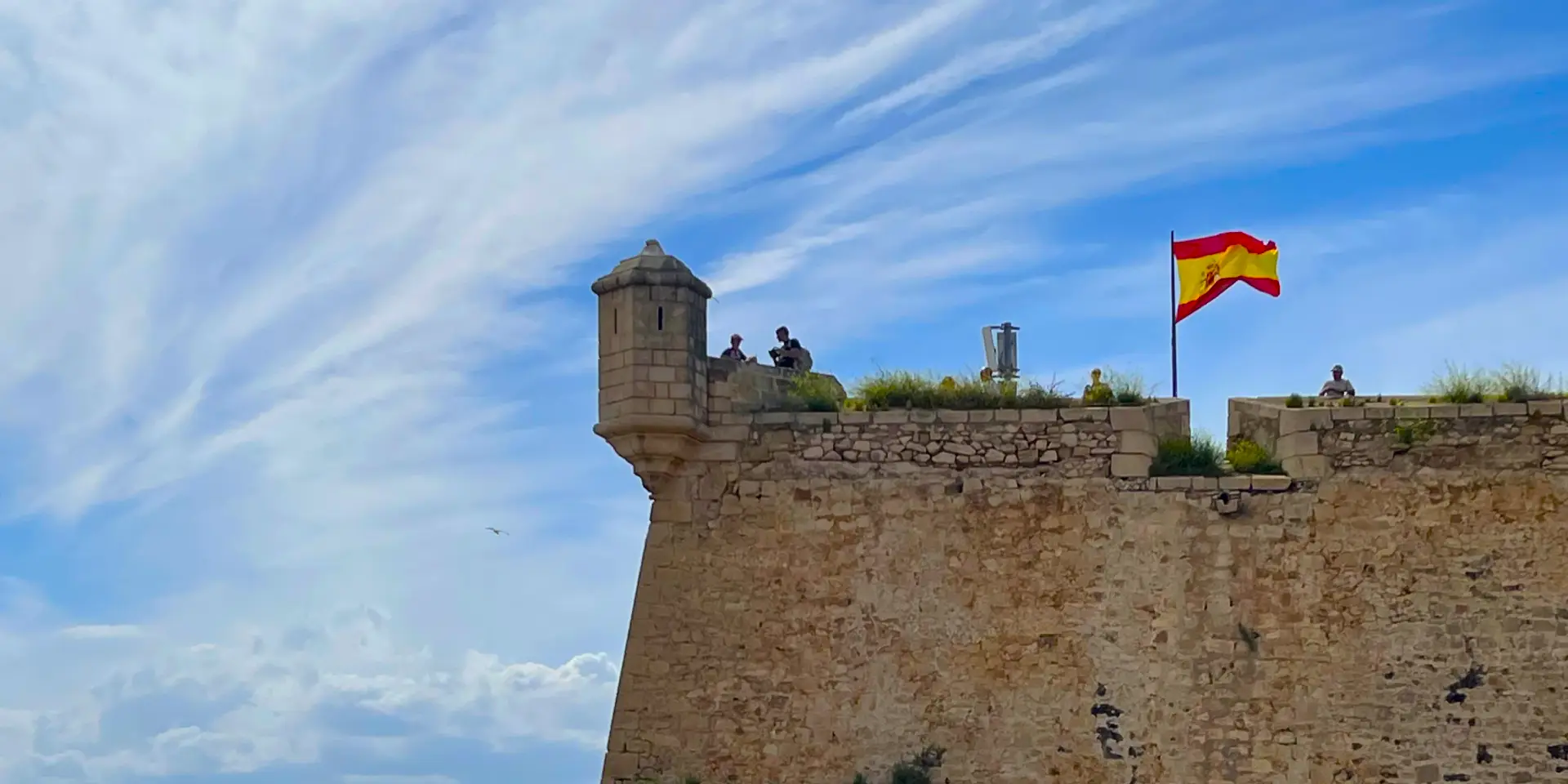
Santa Bárbara Castle in Alicante: Overview, History, and Why It Is the City’s Main Landmark
Santa Bárbara Castle (Castillo de Santa Bárbara) is the main historical landmark of Alicante, rising to an altitude of approximately 166 meters above sea level on Mount Benacantil. It is a symbol of the city and one of the most visited sites on the Costa Blanca coastline thanks to its rich history and panoramic views of the Mediterranean Sea and the city.
Why Santa Bárbara Castle Is the Symbol of Alicante
The castle is visible from almost every part of the city and defines Alicante’s recognizable skyline. Its history spans more than a thousand years: it preserves traces of the Arab, medieval, and later Spanish periods, making it an important cultural and archaeological site.
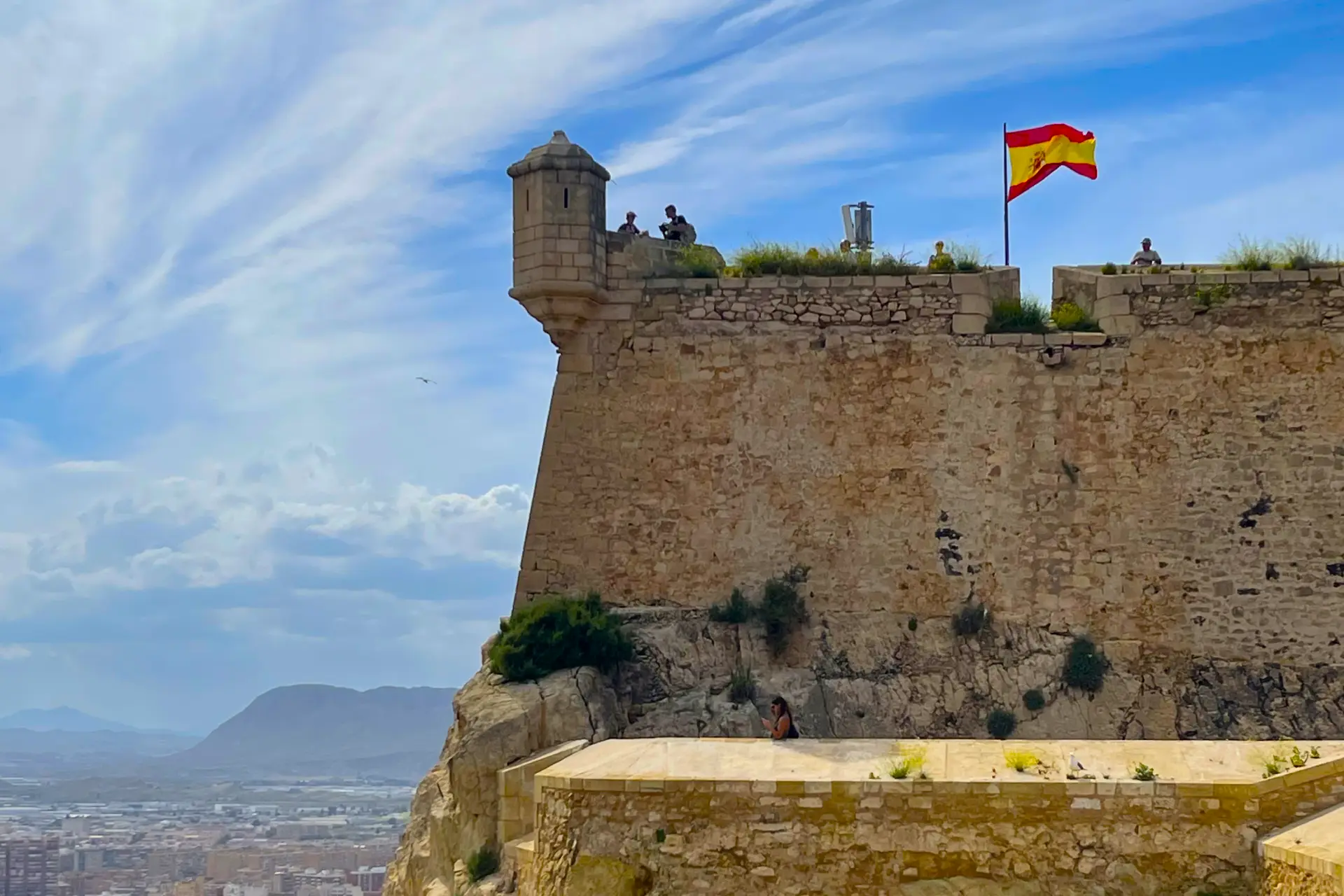
Today, the castle is included in Spain’s list of cultural heritage sites and serves as a tourist and cultural complex with exhibitions and viewing platforms.
Main Advantages of Visiting Santa Bárbara Castle
- Panoramic views of Alicante, the port, and the Mediterranean Sea
- Free entrance to the castle grounds
- Unique history with multi-layered architecture from different eras
- Convenient location in the city center
- Photo spots offering some of the best views of the Costa Blanca coastline
Is It Worth Visiting Santa Bárbara Castle?
Yes, visiting Santa Bárbara Castle is considered an essential part of any itinerary in Alicante. It combines historical significance, natural beauty, and easy accessibility, making it attractive for both independent travelers and family visits.
Overall Impression
Santa Bárbara is not just a castle, but a full open-air viewpoint and historical park. Visitors can spend from one to two hours here enjoying the views, architecture, and atmosphere of the old city.
Where Santa Bárbara Castle Is Located in Alicante
Santa Bárbara Castle (Castillo de Santa Bárbara) is located in the central part of Alicante, on the summit of Mount Benacantil. The elevation is approximately 166 meters above sea level, making it one of the most prominent and dominant points in the city landscape.
Location in Relation to Key City Areas
The castle is within walking distance of the main tourist zones of Alicante. Nearby locations include:
- Postiguet Beach
- Historic city center
- Santa Cruz district
- Explanada waterfront promenade and port area
Panoramic Views and Geographic Importance
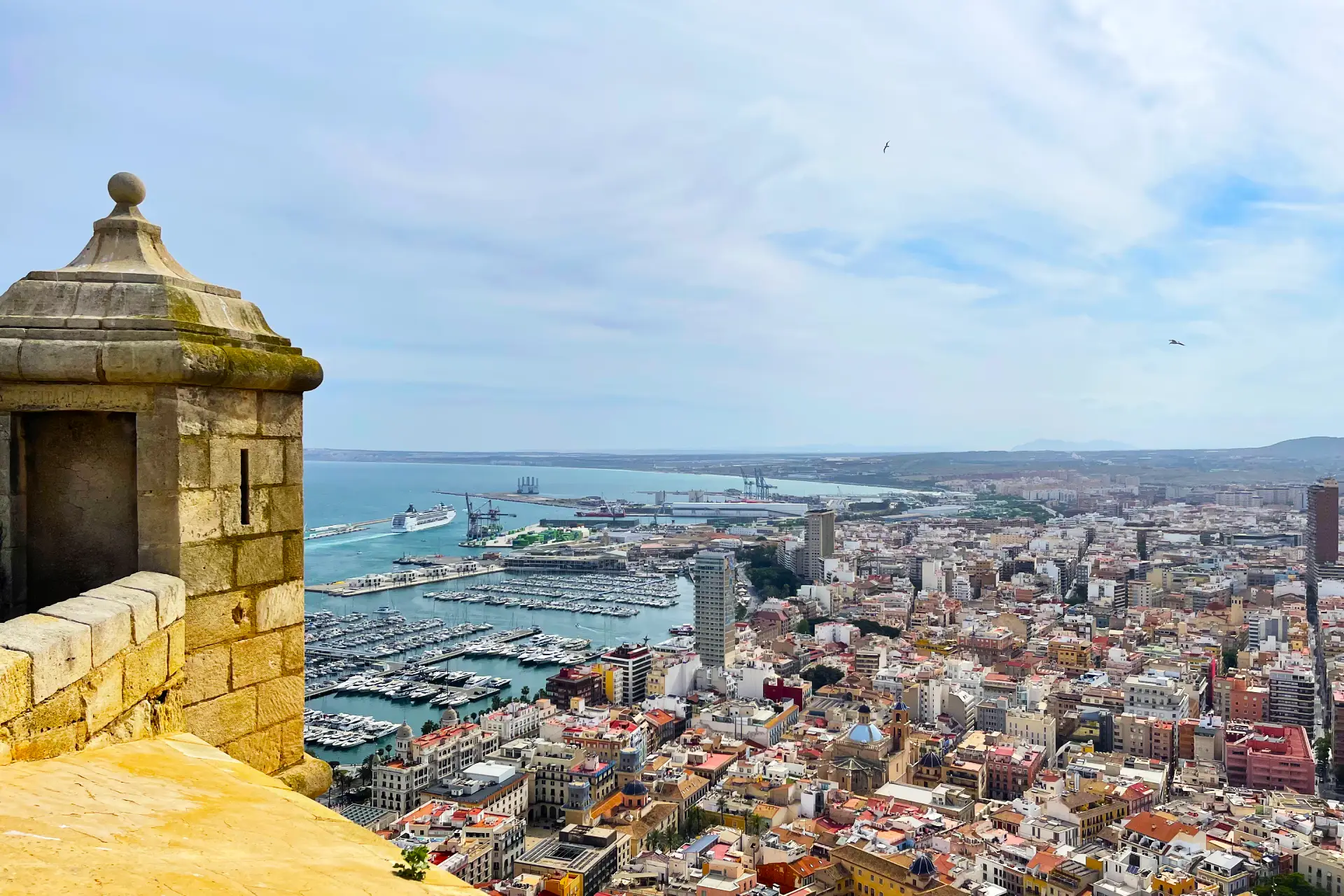
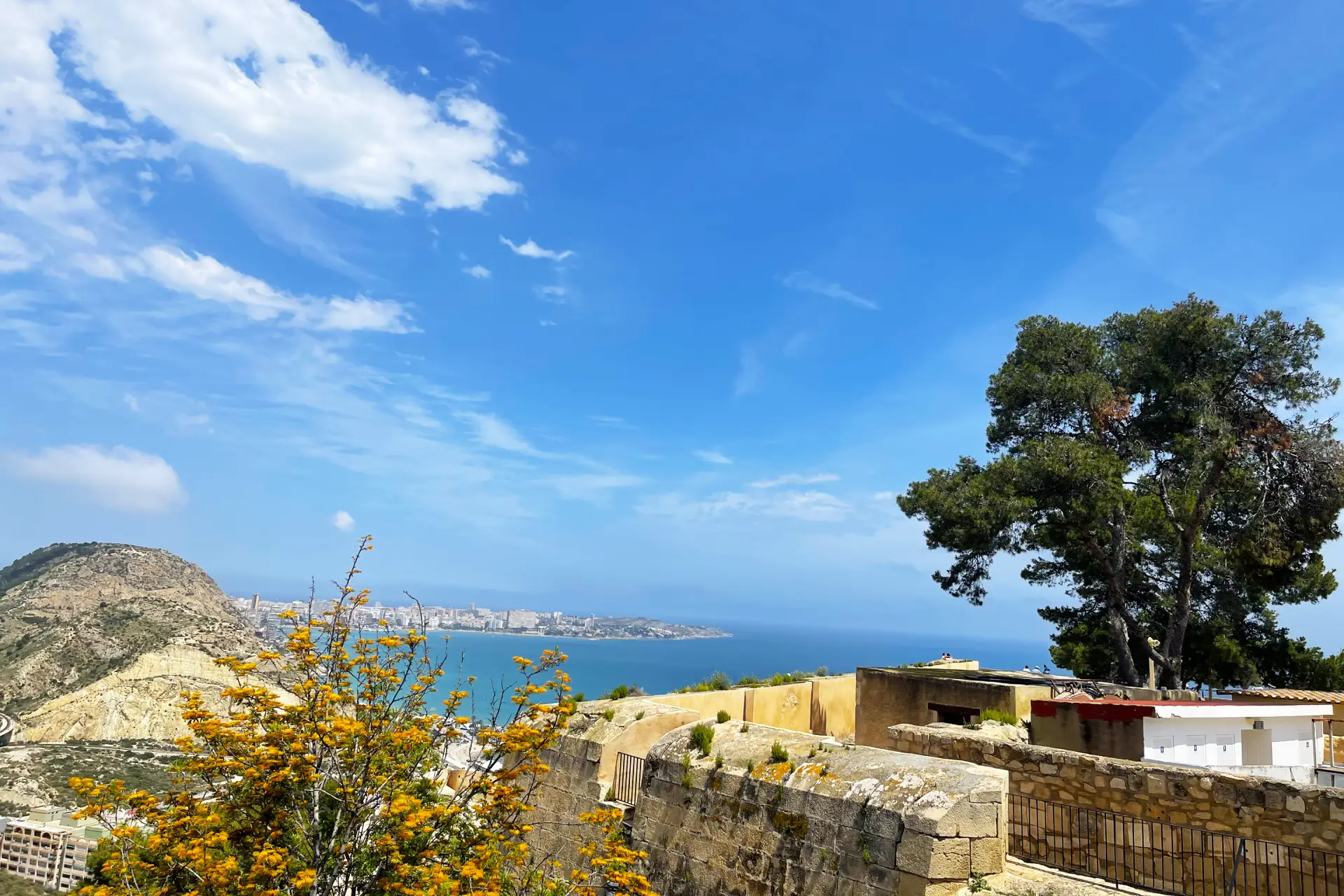
Thanks to its position on a rocky elevation, the castle offers a 360-degree view of the city and coastline. From its viewpoints, visitors can see the Mediterranean Sea, Alicante port, the beach line, and the urban landscape, including both historic quarters and modern districts.
Accessibility and Distance from the City Center
The castle is integrated into the urban structure and is one of the most accessible historical attractions in Spain.
From Postiguet Beach, it takes only a few minutes on foot to reach the lower entrance of the lift. Access to the castle is possible on foot, by elevator, or via combined walking routes through the old town.
Why the Castle Is Visible from Almost Anywhere in Alicante
Mount Benacantil is an isolated rocky elevation within the urban area. Because of this, the castle serves as a dominant visual landmark and is visible from nearly every part of Alicante, including the coastline and central districts.
Up-to-Date Visitor Information
As of 2026, entry to the castle grounds remains free of charge. The main visitor flow uses the lift located near Postiguet Beach. Walking routes through the historic city are also available.
How to Get to Santa Bárbara Castle in Alicante
Santa Bárbara Castle is located on Mount Benacantil in central Alicante and can be reached in several ways: on foot, by lift, by taxi or shuttle, and partially via public transport.
As of 2026, access is regulated by municipal services, so availability may depend on current city works, but the main routes remain stable.
On Foot Through the Old Town
One of the most popular options is walking up through the Santa Cruz district and the historic center. The route passes through narrow streets with white houses, stairways, and viewpoints. This is the most atmospheric option, allowing visitors to experience the old part of Alicante on the way up.
The ascent is moderately difficult: it includes steep sections and stairs, so comfortable footwear and water are recommended, especially in warm weather.
The advantage of this route is the panoramic views of the city and coastline along the way, as well as the opportunity to combine the castle visit with a walk through the old quarter.
By Lift from Postiguet Beach
The most convenient option is the underground lift located near Postiguet Beach on Avenida Juan Bautista Lafora. The lift takes visitors almost directly to the upper levels of the castle inside Mount Benacantil.
As of 2026, the lift operates during castle opening hours but may occasionally close for maintenance. A paid entry is usually required for the lift, while access to the castle itself remains free.
This option is ideal for families with children, elderly visitors, and those who want to reach the top without physical effort.
By Car or Taxi
Direct access by private car to the upper part of the castle is restricted. Vehicle access is regulated by the municipality, with priority given to public transport and pedestrians in recent years.
Taxis can take passengers to the nearest permitted drop-off zones at the base or intermediate points, but the final section usually still requires walking.
This option is mainly used when time is limited or for private guided tours.
Public Transport and Shuttle
Alicante city center can be reached by urban buses and the TRAM tram system. Main stops are located in the Luceros area and near Postiguet Beach. From there, the route continues on foot or via connecting services.
A city shuttle bus to the castle also operates, linking key points in the city with the base of Mount Benacantil. It is used as an alternative to the lift during busy periods or maintenance works.
This option is convenient for travelers without a car who want to minimize walking uphill.
History of Santa Bárbara Castle in Alicante
Santa Bárbara Castle (Castillo de Santa Bárbara) is one of the key historical monuments of the Valencia region, with origins linked to several civilizations that inhabited the territory of modern Alicante.
Archaeological findings on the slopes of Mount Benacantil confirm the presence of settlements from the Bronze Age, as well as Iberian and Roman periods.
Foundation: The Arab Period (9th Century)
The main fortification at the summit of the mountain was established at the end of the 9th century during Muslim rule. Due to its strategic position above Alicante Bay, the castle served as a defensive and observation point controlling both the coastline and inland areas. It was during this period that the initial structure of the future citadel was formed.
The Middle Ages and Christian Reconstruction
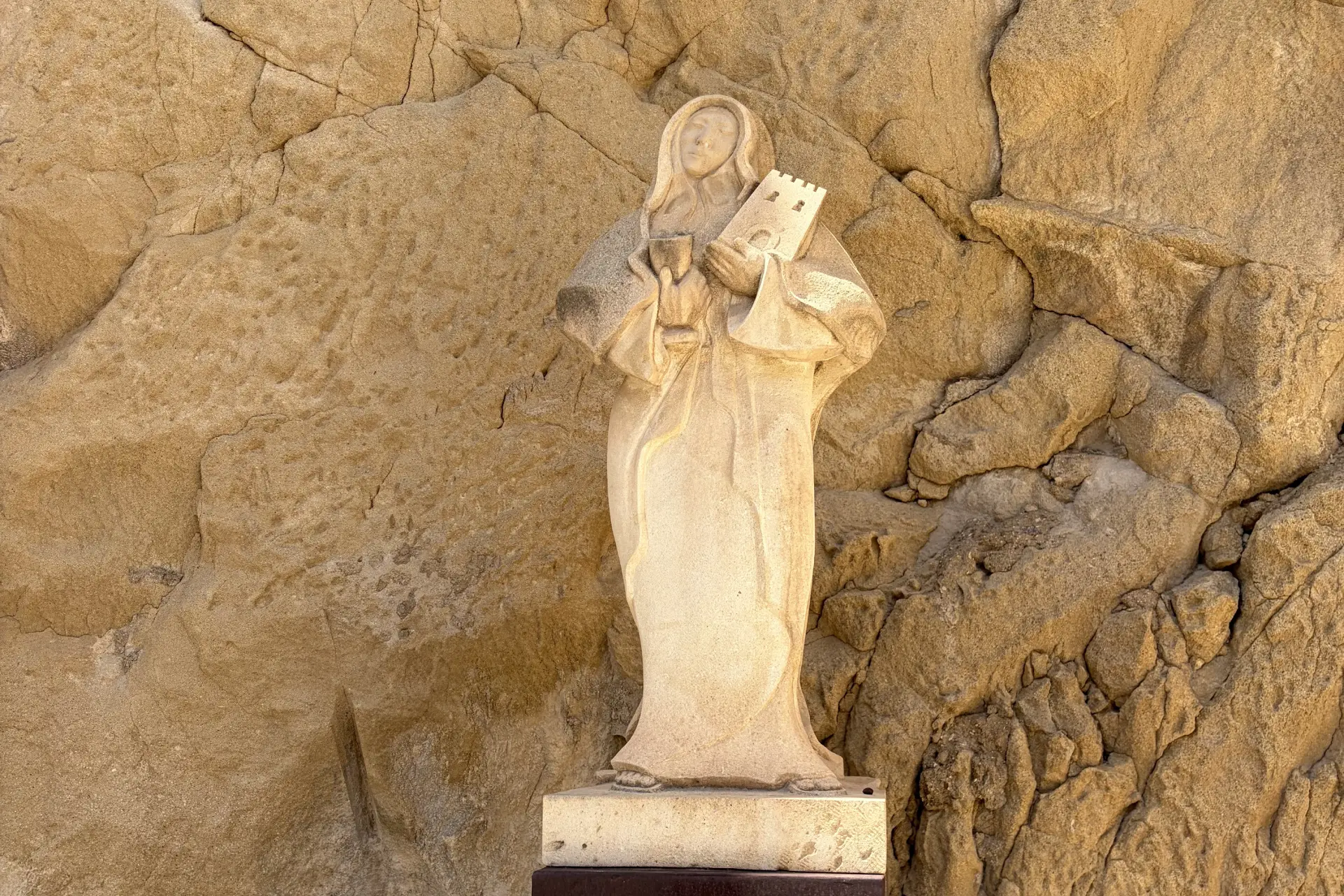
In 1248, the fortress was captured by the troops of Infante Alfonso of Castile on Saint Barbara’s Day, which gave the castle its current name. Later, in 1296, control passed to the Crown of Aragon, after which major reconstruction of the defensive structures began.
In the following centuries, especially under the reigns of Peter IV and Charles I, the castle was repeatedly modernized. The most significant architectural changes date back to the 16th century, when key structures that still exist today were built.
Military Importance of Santa Bárbara Castle in Alicante
Due to its elevation of around 166 meters and control over the Mediterranean coastline, the fortress held major strategic importance. It was used as a defensive stronghold in various military conflicts, including wars between European powers and internal uprisings. Its position allowed control of maritime approaches and protection of the city from both sea and land attacks.
Role of Santa Bárbara Castle in the History of Alicante
Throughout the centuries, the castle has been an integral part of the city’s development. It served as an administrative, military, and symbolic center of power. The urban structure of Alicante formed around it, and its silhouette became a recognizable symbol of the region.
Transformation of Santa Bárbara Castle into a Tourist Attraction
In the 20th century, the fortress lost its military significance and was gradually restored as a historical and cultural site. Since the mid-20th century, it has been open to visitors and is now one of the most popular tourist attractions in Spain. Today it hosts viewing platforms, exhibition spaces, and cultural event areas.
What to See Inside Santa Bárbara Castle in Alicante: Upper, Middle, and Lower Levels
Santa Bárbara Castle in Alicante is built on several levels formed during different historical periods. During a visit, many tourists pass interesting areas without understanding the differences between them. To get the most out of the experience, it is important to know what each level offers and how best to explore the site.
Upper Level (La Torreta) – The Oldest Part of the Castle
The upper level is located at the very top of Mount Benacantil and is considered the heart of the fortress. This is where the earliest Arab-period structures were located, which made Santa Bárbara an important Mediterranean defensive site.
It is the highest point of the complex, offering the best panoramic views of Alicante, the port, and the Costa Blanca coastline.
What to Look for on the Upper Level of Santa Bárbara Castle in Alicante
- Torre del Homenaje (Keep Tower)
- Remains of medieval fortifications
- The highest viewpoints of the castle
- 360-degree panorama
- View of Tabarca Island on clear days
The upper level is especially interesting for history enthusiasts and photographers, as it preserves the oldest defensive elements.
Middle Level (Recinto de Felipe II) – The Historical Core of the Castle
The middle level was mainly developed in the 16th century during the reign of King Philip II. It is the most visited part of the castle, where key historical rooms and museum spaces are located.
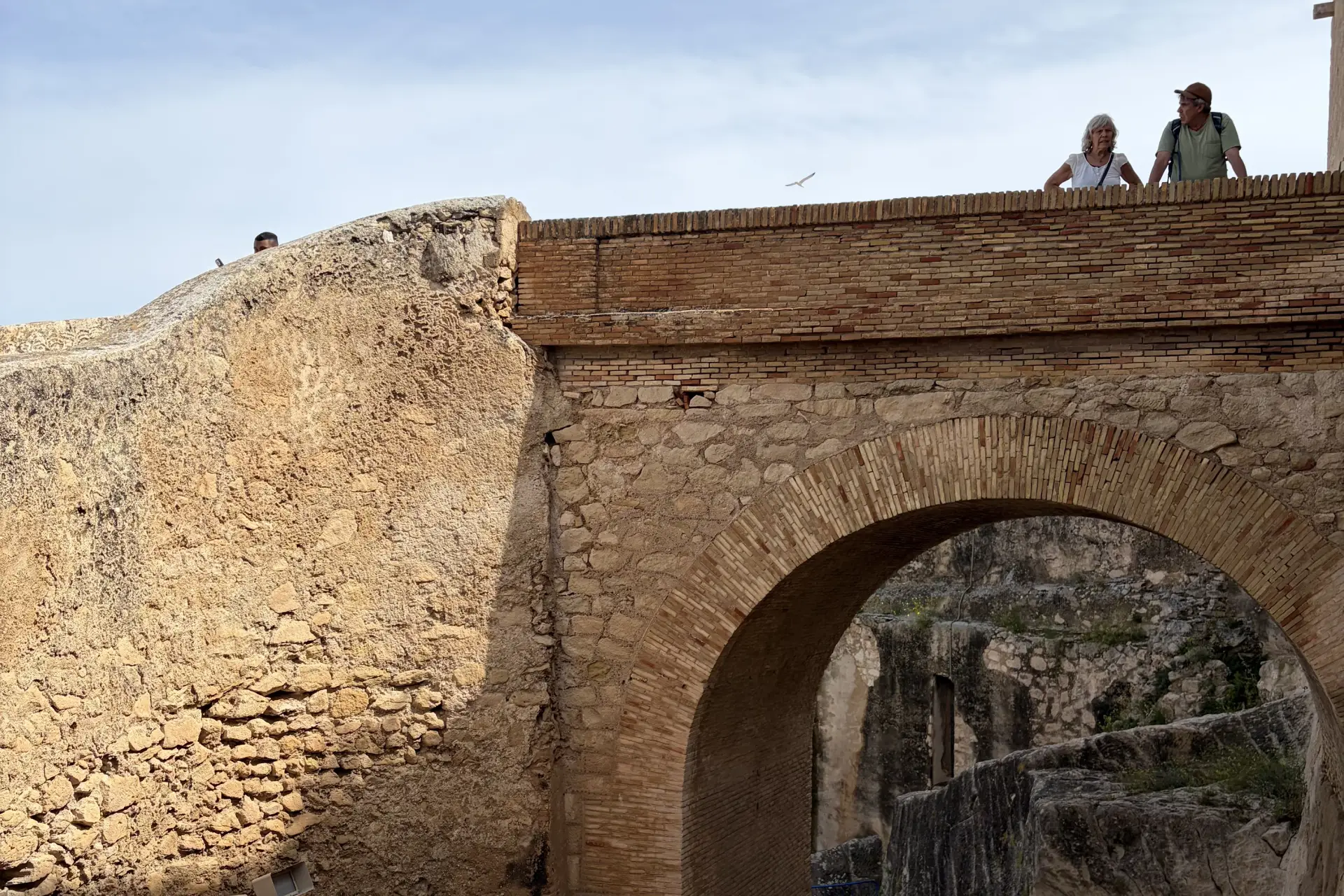
Here visitors can see how the castle looked during its peak military importance.
What to Look for on the Middle Level
- Philip II Hall
- Courtyards and plazas
- Historical barracks
- Exhibition spaces
- MUSA Museum (City Museum of Alicante)
This is where the main informational displays about the history of Alicante and the castle’s development over the centuries are located.
If time is limited, the middle level is considered the most informative part of the visit.
Lower Level (Revellín del Bon Repós) – Bastions and Defensive Structures
The lower level was developed later and is associated with the modernization of the fortress in the 17th–18th centuries. Its main purpose was to protect the approaches to Mount Benacantil and strengthen the city’s defenses.
There are fewer museum elements here, but this part helps visitors better understand the scale of the fortification system.
What to Look for on the Lower Level
- Massive bastions
- Defensive walls
- Casemates and technical rooms
- Historic passageways between levels
- Artillery platforms
From the lower level, there are beautiful views of the city center and the Santa Cruz district, and it also includes main pedestrian routes leading up to the castle.
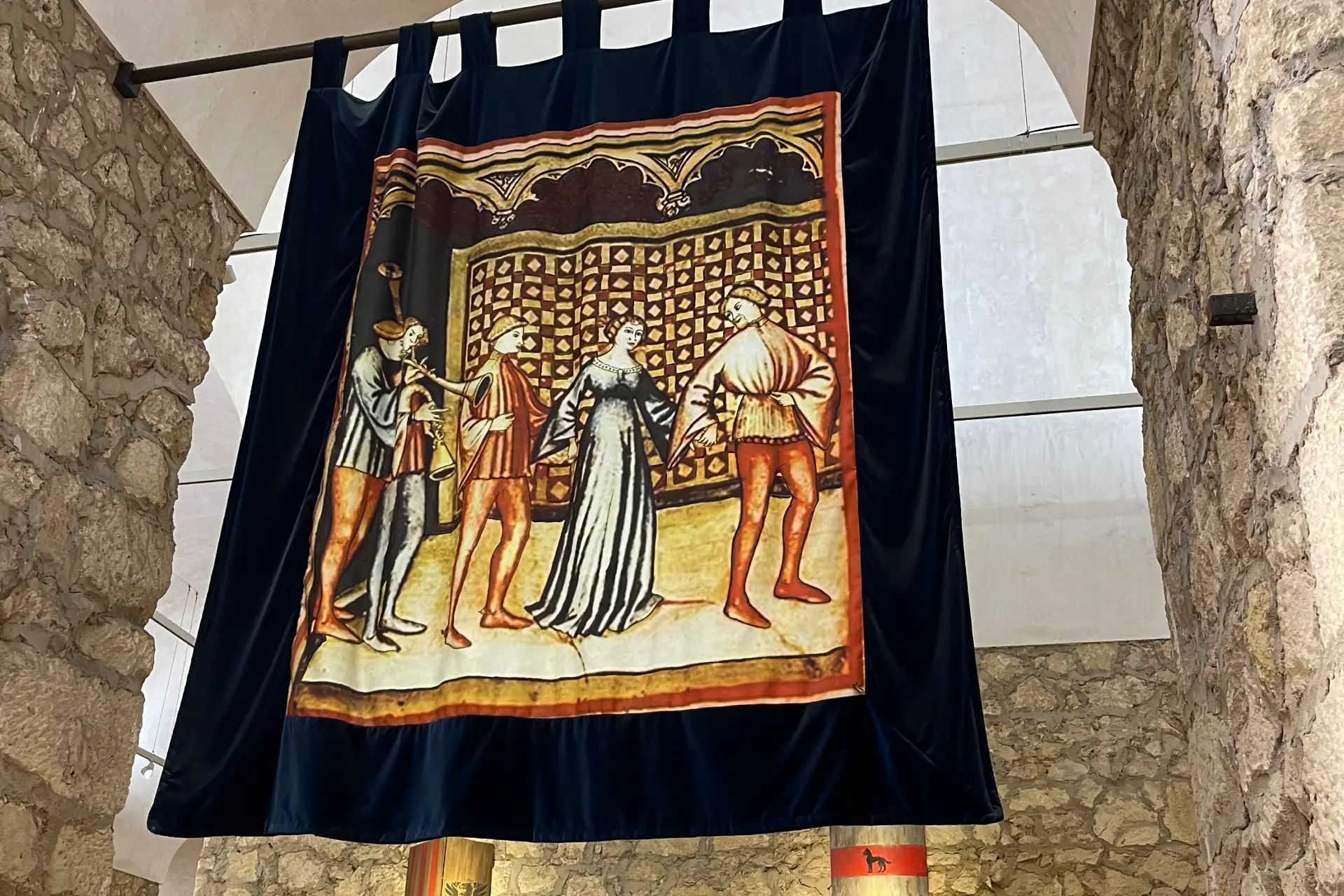
Which Level of the Castle Is the Most Interesting?
Each level serves its own purpose and reflects a different era in the history of Santa Bárbara Castle.
- Upper level – best views and the oldest history.
- Middle level – museums, exhibitions, and main historical structures.
- Lower level – defensive architecture and bastions.
For a complete experience, it is recommended to explore all three levels in sequence. This route allows visitors to observe the evolution of the fortress from a medieval citadel into one of the largest defensive complexes on the Spanish coast.
Best Viewpoints at Santa Bárbara Castle
One of the main reasons to visit the castle is its panoramic views, considered among the best in Alicante. Different viewpoints offer unique perspectives of the city and the sea.
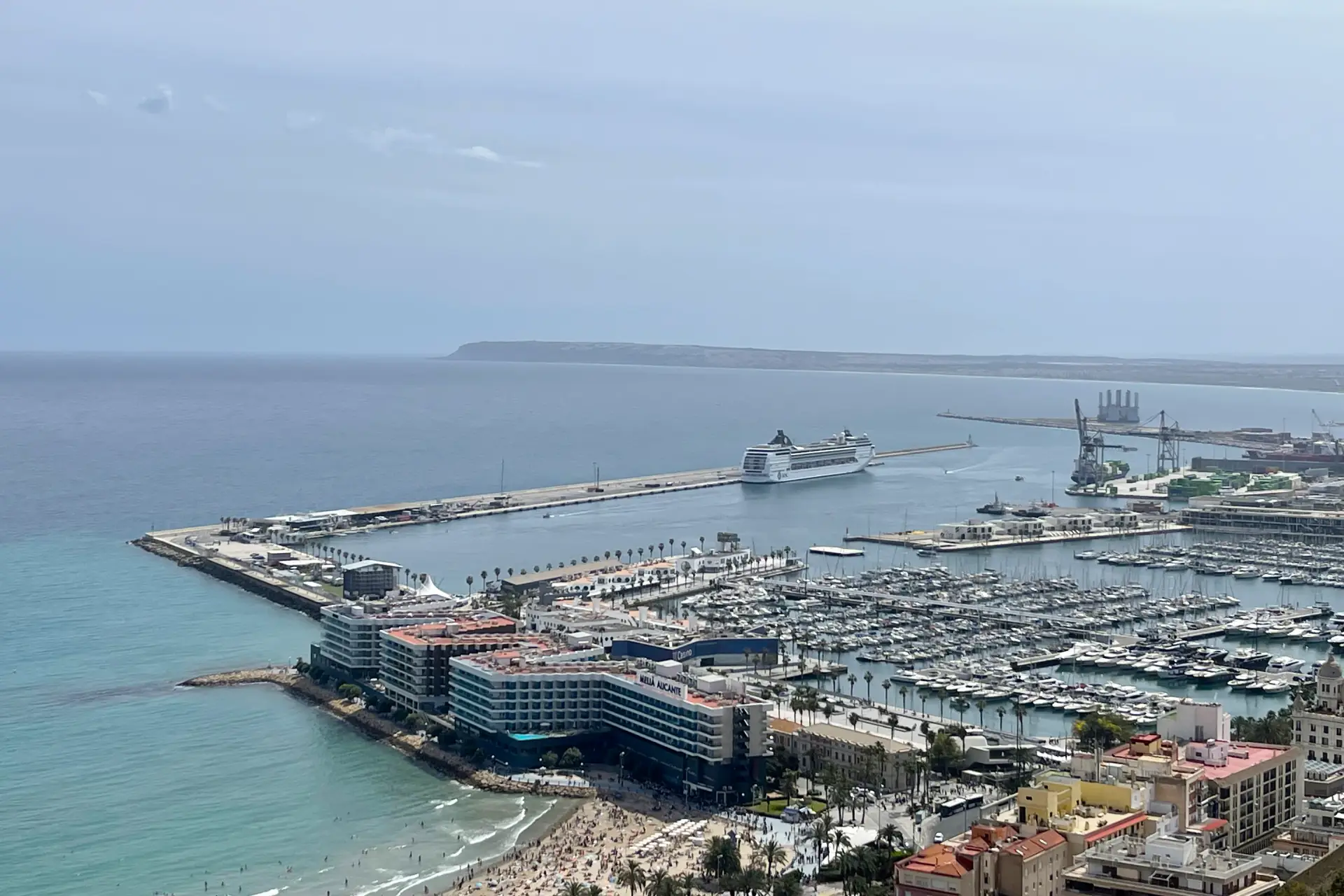
- View of Alicante port and Explanada promenade
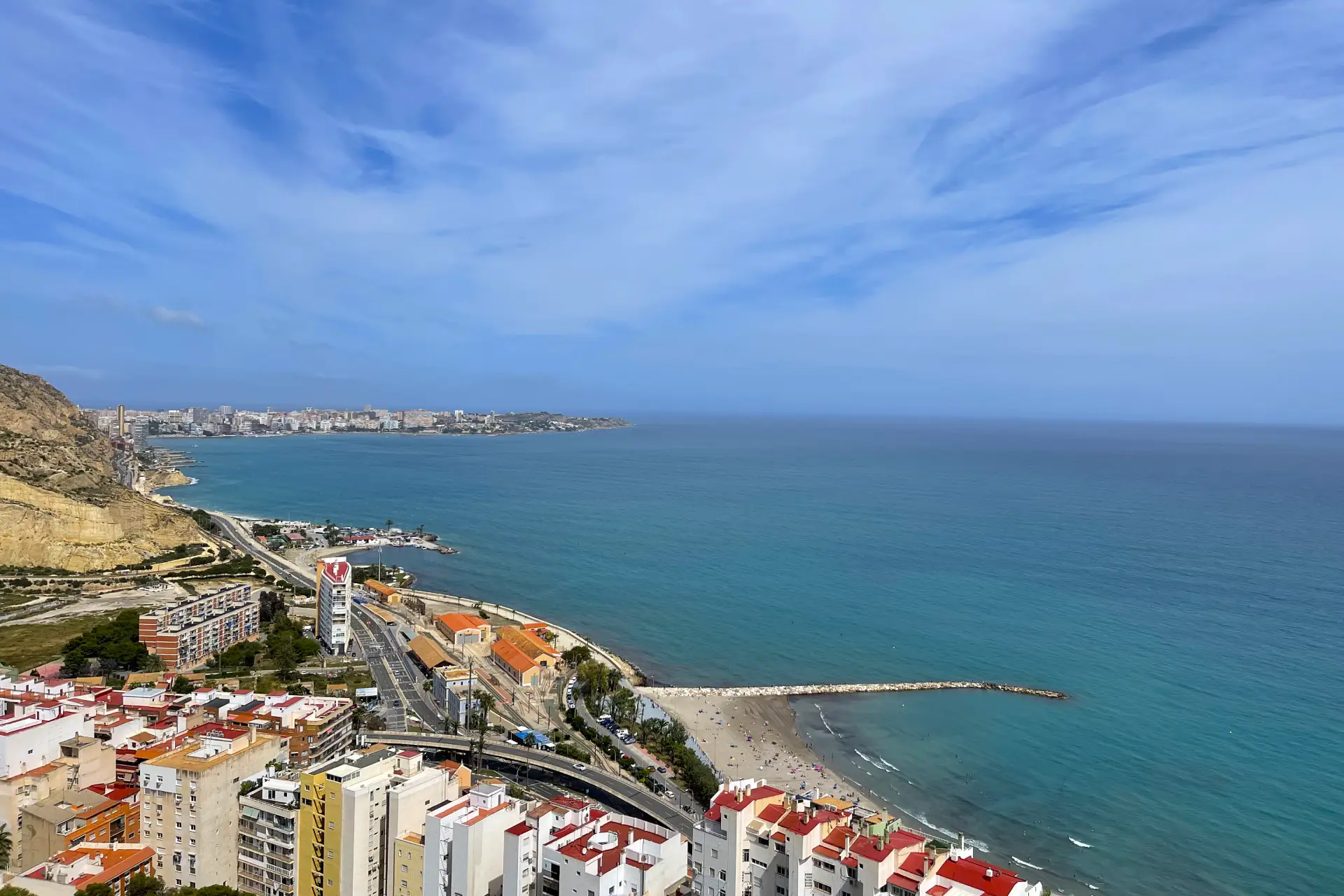
- Panorama of Postiguet Beach and the city coastline
- Sunset viewpoints overlooking the Mediterranean Sea
- Rock formation “Moor’s Face” (Cara del Moro), a natural silhouette of Mount Benacantil
“Moor’s Face” is a natural geological formation that has become one of the city’s visual symbols and can be seen from various points of the castle and coastline.
How Much Time You Need to Visit Santa Bárbara Castle in Alicante
A visit to Santa Bárbara Castle (Castillo de Santa Bárbara) usually takes between 1 and 2 hours, although the actual duration depends on the chosen route, season, and interest in museums and viewpoints. This is confirmed by common tourist experience and official city guide recommendations.
Optimal Visit Duration
A standard visit without a guided tour takes approximately 1.5–2 hours. This is enough time to explore the main levels, reach viewpoints, and see the historical areas.
For a deeper visit, including museum exhibitions and walks along the bastions,
you should plan for up to 2.5–3 hours.
Best Time to Visit the Castle
The most comfortable times to visit are morning hours or late afternoon near sunset. This is due to Alicante’s climate and the open-air nature of the castle with limited shade.
- Morning – fewer tourists and comfortable temperatures
- Sunset – best panoramic views of the city and the Mediterranean Sea
- Daytime – suitable for lift access and short visits, but can be hot in summer
In summer, the castle stays open longer (until late evening), making sunset visits especially popular.
Seasonal Features of Visiting
Alicante has a Mediterranean climate with hot summers and mild winters, so the season significantly affects the comfort of the visit.
- Summer (June–September) – high temperatures, recommended to visit in the morning or evening
- Spring and autumn – most comfortable seasons for walking
- Winter – mild weather, but wind may occur at the top of the castle
It is important to note that the castle is mostly an open-air site, so water and sun protection are recommended during hot days.
Practical Tourist Tip
For a complete experience, it is best to include the castle visit as part of a broader walking route: the old town of Alicante, the Santa Cruz district, and Postiguet Beach are often combined in one itinerary. In this format, the total walking time can range from 3 to 5 hours.
Admission, Tickets, and Opening Hours of Santa Bárbara Castle in Alicante
Santa Bárbara Castle (Castillo de Santa Bárbara) is one of the most accessible historical attractions in Alicante. As of 2026, admission to the castle grounds remains completely free of charge, although certain services such as the lift and shuttle bus require payment.
Castle Admission: Free or Not?
Access to the castle itself, including walks along the bastions, viewing platforms, and historical areas, is free of charge. This is confirmed by official information provided by the Alicante municipality. Only transportation options used to reach the castle involve a fee.
- Admission to the castle grounds – free of charge
- Access to viewpoints and historical areas – included
- Guided tours and special events – may require payment
Castle Lift: Cost and Features
The underground lift located near Postiguet Beach (Avenida Juan Bautista Lafora) is the most convenient way to reach the top of Mount Benacantil.
- Price: approximately €2.70 per trip
- Last boarding: approximately 30–40 minutes before closing time
- Advance booking is recommended during the high season
The lift is especially popular among families with children, elderly visitors, and travelers with limited time.
Shuttle Bus and Alternative Ways to Reach the Castle
An alternative to the lift is the city-operated CSB shuttle bus, which connects the city center with the base of the castle. It is commonly used during periods of high demand or temporary lift maintenance.
- Shuttle fare: approximately €1.45 per trip
- Route: city center – castle base – stops at key locations
- Payment: bank card or transport card
Castle Opening Hours (Updated for 2026)
Opening hours vary by season. The castle is open throughout the year except on certain public holidays. Admission closes 30 minutes before the official closing time.
- November – February: 10:00 AM – 6:00 PM
- March – June: 10:00 AM – 8:00 PM
- July – August: 10:00 AM – 11:00 PM
- September – October: 10:00 AM – 8:00 PM
Evening Visits
An evening visit is considered one of the most attractive options thanks to the mild climate and spectacular sunset views. During the summer season, the castle remains open later, allowing visitors to watch the sunset over the Mediterranean Sea directly from the viewing platforms.
It is important to note that evenings are usually the busiest time of day, particularly during the tourist season, so planning your visit in advance is recommended.
Concerts, Exhibitions, and Guided Tours at Santa Bárbara Castle: Events and Activities for Visitors
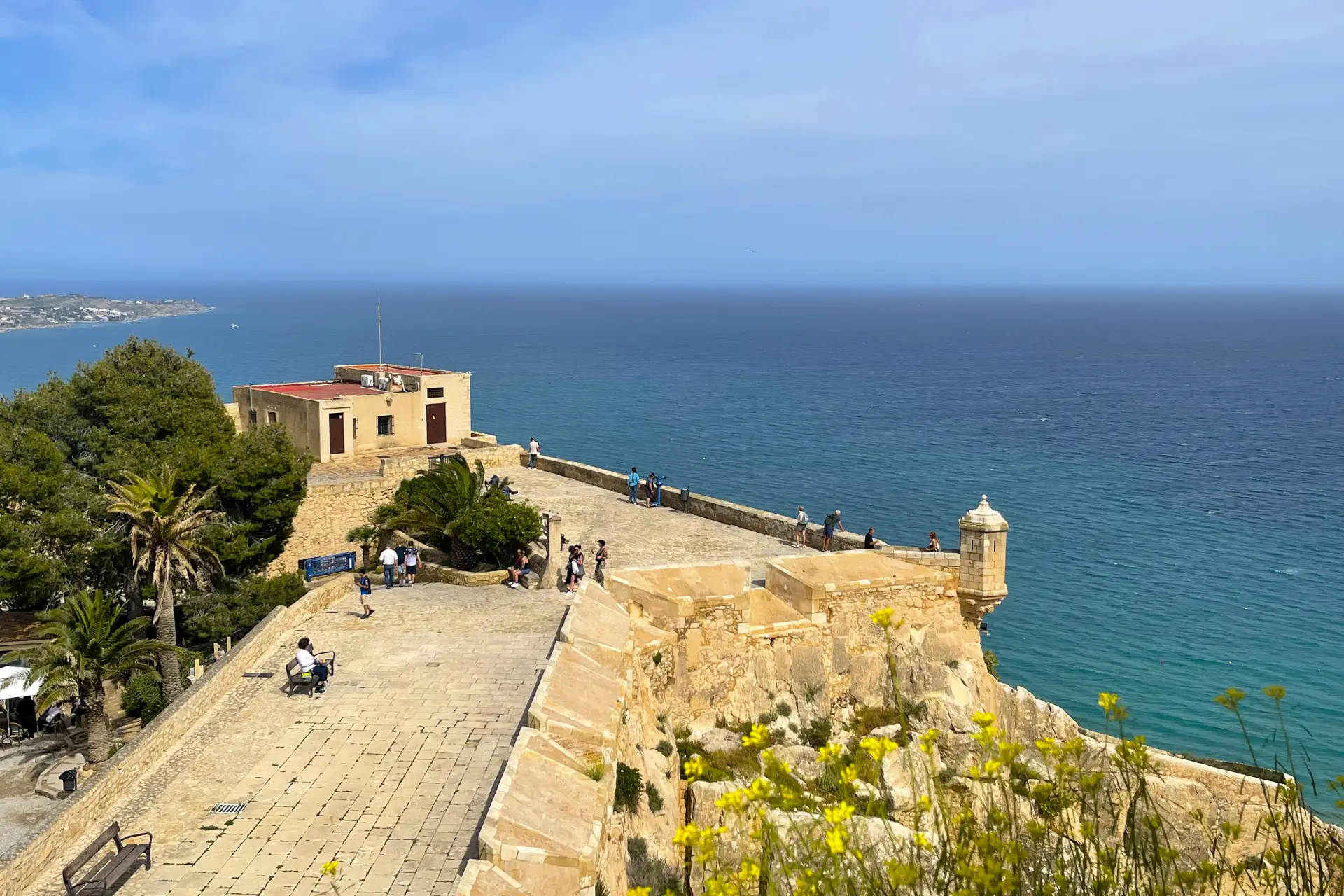
Santa Bárbara Castle in Alicante is not only a historical monument and a viewpoint overlooking the city but also an important cultural venue. Throughout the year, it hosts concerts, temporary exhibitions, themed guided tours, and seasonal events that allow visitors to experience the castle from a different perspective. Thanks to its unique location and historic atmosphere, Santa Bárbara remains one of the leading cultural centers in Alicante.
Open-Air Concerts
During the spring and summer seasons, musical events are regularly held within the castle grounds. Historic bastions and open spaces are transformed into open-air concert venues where visitors can enjoy live music while admiring panoramic views of the Mediterranean Sea.
- Classical music concerts
- Jazz performances
- Spanish guitar and flamenco shows
- Summer music festivals
- Evening cultural programs
Most events take place during the warmer months, when the castle operates extended opening hours and welcomes large numbers of visitors.
Temporary Historical and Art Exhibitions
Temporary exhibitions dedicated to the history of Alicante, regional archaeology, and the cultural heritage of the province are regularly organized within the castle complex. Some exhibitions are displayed in museum areas and historic rooms throughout the site.
- Archaeological exhibitions
- Historical documents and maps
- Photography projects focused on Alicante
- Contemporary art exhibitions
- Cultural initiatives organized by the municipality
Exhibition themes change several times throughout the year, meaning that even repeat visits can provide a completely new experience.
Guided Tours of Santa Bárbara Castle
Visitors can choose between self-guided exploration and organized tours. Guided tours offer deeper insight into the history of the fortress, its architecture, and its role in defending the Mediterranean coastline.
- General tours of the castle’s main levels
- Historical routes through the fortifications
- Themed tours focusing on medieval Alicante
- Group and private tour options
- Seasonal tours featuring additional exhibitions
During the high tourist season, the number of guided tours usually increases, particularly in the evening hours.
Night Visits and Evening Programs
During the summer months, the castle often becomes the venue for special evening events. Thanks to the illuminated bastions and panoramic views of Alicante at night, these programs are extremely popular among visitors.
- Sunset guided tours
- Evening cultural programs
- Photography tours around the castle
- Themed historical events
The nighttime atmosphere allows visitors to experience the castle in a completely different way than during daylight hours.
Seasonal Events and City Celebrations
During Alicante’s major festivals and celebrations, the castle frequently serves as one of the official venues for the city’s cultural program. Exhibitions, concerts, theatrical performances, and educational activities may all take place within the fortress grounds.
- Cultural programs during the high season
- Historical reenactments
- City festivals
- Educational activities for children and adults
- Special exhibitions commemorating significant dates
Where to Find the Latest Event Schedule
Because the event calendar is updated regularly, the dates of concerts, exhibitions, and guided tours may change. Before visiting, it is recommended to check the latest schedule on the official websites of the City of Alicante and the castle administration.
If you are planning a multi-day stay, it is worth reviewing the event calendar in advance. On days when concerts and special programs take place, a visit to the castle can become not only a sightseeing experience but also a full cultural event.
Why You Should Visit Santa Bárbara Castle in Alicante
Santa Bárbara Castle (Castillo de Santa Bárbara) is considered one of Alicante’s most important landmarks and the premier viewpoint along the entire Costa Blanca coastline. According to official data and visitor experience, it is one of the most visited historical attractions in the region due to its combination of history, panoramic scenery, and accessibility.
The Best Views from Santa Bárbara Castle in Alicante
The castle stands approximately 166 meters above sea level on Mount Benacantil, providing spectacular panoramic views of both the city and the sea.
From the upper terraces, visitors can enjoy sweeping views covering almost the entire Bay of Alicante.
- Views of the Mediterranean Sea and coastline
- Panoramas of Alicante Port and the waterfront promenade
- Overlooks of Postiguet Beach and the city center
- Excellent sunset photography locations
It is precisely because of these views that the castle is often included among the finest panoramic viewpoints in Spain.
Historical Significance
The history of the castle spans more than a thousand years. The first fortifications on this site date back to the Arab period of the 9th century, after which the fortress underwent multiple reconstructions during the Middle Ages following its incorporation into Christian kingdoms.
- Remains of 9th–10th century Arab fortifications
- Medieval defensive structures
- Reconstructions carried out under the Crowns of Aragon and Castile
- Military use until the 19th and 20th centuries
This rich historical layering makes the castle an important part of Spain’s cultural heritage.
A Unique Location in the Heart of the City
One of the castle’s most distinctive features is its location within the urban fabric of Alicante. It is a rare example of a large medieval citadel integrated directly into a modern city.
- Walking distance from the city center
- Close proximity to Postiguet Beach and the Old Town
- Accessible on foot or by lift
- Visible from almost every part of the city
This location makes it more than just a museum—it is an integral part of everyday life in Alicante.
Atmosphere and Visitor Experience
A visit to the castle combines historical exploration with relaxation at open-air viewpoints. The appeal lies not only in the exhibits but also in the atmosphere of the site itself.
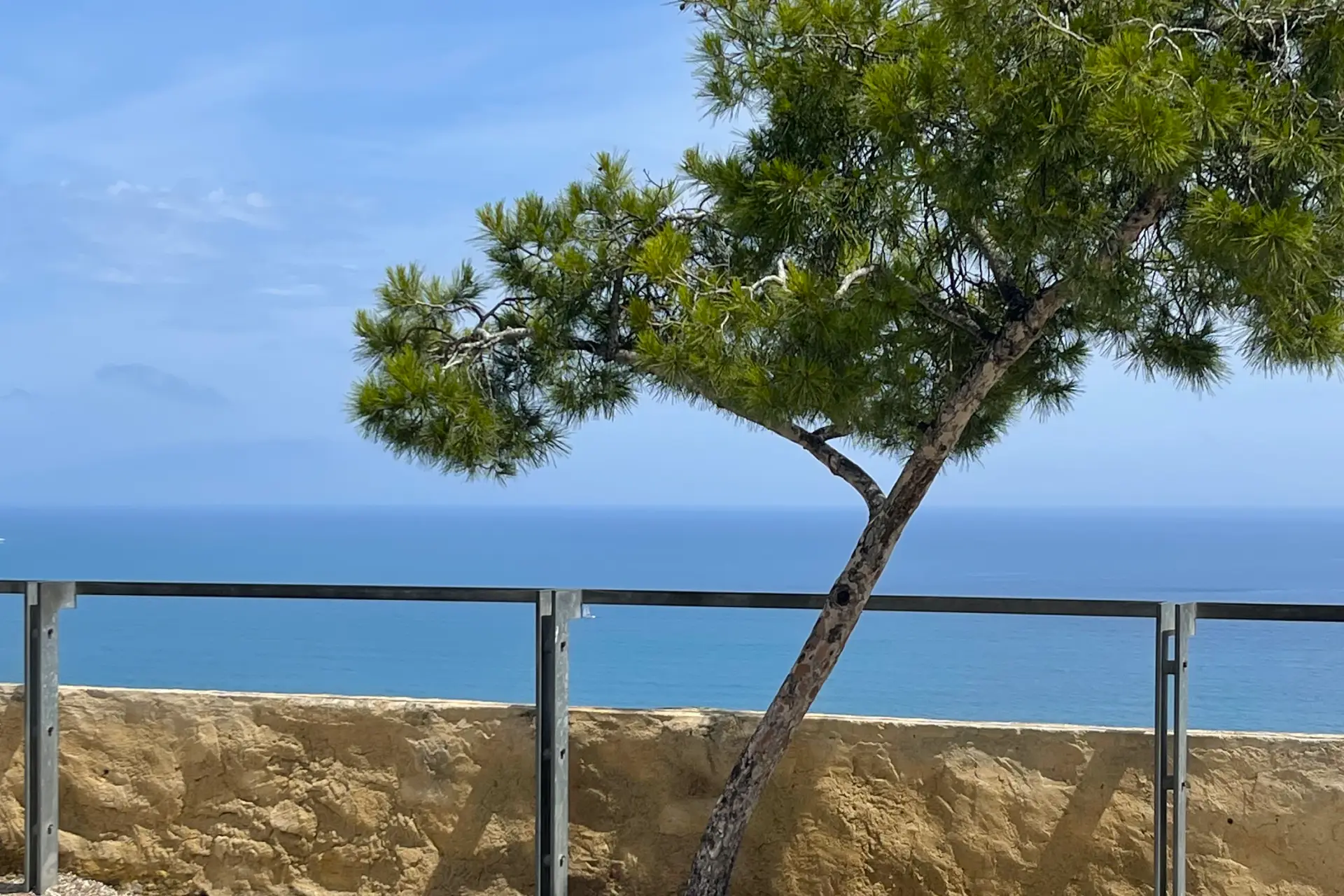
- Sunsets over the Mediterranean Sea viewed from the castle walls
- Walking routes through bastions and inner courtyards
- Architectural elements from different historical periods
- Photography locations with panoramic city and coastal views
As a result, the castle is perceived not only as a historical monument but also as one of Alicante’s premier scenic and recreational destinations.
Cafés, Restrooms, Drinking Water, and Shade at Santa Bárbara Castle: What You Need to Know Before Visiting
When planning a visit to Santa Bárbara Castle, most travelers focus on its history and viewpoints. However, practical considerations are equally important: where to find restrooms, whether drinking water is available, if there is a café on-site, and how comfortable the castle is during hot weather. These details are particularly important for families with children, elderly visitors, and tourists exploring the castle during the summer months.
Are There Any Cafés Inside Santa Bárbara Castle?
Several cafés and refreshment areas operate within the castle grounds, where visitors can purchase soft drinks, coffee, light snacks, and ice cream. The operation of these establishments depends on the season and visitor numbers, so opening hours and available products may vary throughout the year. The main food and beverage outlets are located around the middle level of the castle, close to the most visited areas and panoramic viewpoints.
- Soft drinks
- Coffee and tea
- Light snacks
- Ice cream during the high season
Although cafés are available on-site, it is advisable to bring an additional supply of drinking water during the summer months, especially if you plan to walk up to the castle.
Where Are the Restrooms Located?
Public restrooms are available throughout the castle grounds and are situated near the main tourist areas. They are clearly marked with signs and can be found close to rest areas and museum spaces. Most visitors use the facilities immediately after arriving by lift or before beginning their exploration of the upper levels, as distances between different sections of the complex can be considerable.
- Restrooms are located along the main visitor routes
- Available during castle opening hours
- Designed to accommodate large numbers of visitors
- Accessible restroom facilities are available
Can You Refill Drinking Water?
There are drinking water points within the castle grounds, although their number is limited. During the hotter months, water consumption increases significantly, so it is recommended to bring your own bottle. This is particularly important for visitors who walk up through the Santa Cruz district or Ereta Park, where the ascent takes longer and requires greater physical effort.
Is There Shade Inside the Castle?
One of the main practical considerations when visiting Santa Bárbara Castle is the limited amount of natural shade. Much of the site consists of open bastions, stone courtyards, and viewing platforms exposed to direct sunlight. The sunniest areas are the upper level of the fortress and the open panoramic terraces, where temperatures can feel considerably higher than the actual air temperature during summer.
- There is very little shade on the upper level
- The middle level offers several shaded areas and indoor spaces
- Museum areas provide shelter from the heat
- Some rest areas are equipped with covered structures
What Is Especially Important During Summer?
From June to September, temperatures in Alicante regularly exceed 30°C (86°F). Due to the extensive stone surfaces and the limited amount of vegetation, the heat inside the castle often feels more intense than along the coastline. For a more comfortable visit, it is recommended to:
- Plan your visit before 11:00 a.m. or after 6:00 p.m.
- Bring at least one bottle of water per person
- Use a hat and sunscreen
- Take breaks in shaded areas and museum spaces
How Suitable Is the Castle for a Long Visit?
Overall, the castle’s infrastructure is well prepared for visitors, offering restrooms, seating areas, cafés, a lift, and designated routes connecting the different levels. However, Santa Bárbara Castle remains a historic hilltop fortress, so overall comfort depends greatly on the time of day and weather conditions.
If you plan to spend more than two hours exploring the castle, especially during summer, it is advisable to prepare in advance by bringing sufficient water and choosing a time when the sun is less intense. This will allow you to comfortably explore all levels of the fortress and enjoy some of the best views of Alicante without unnecessary fatigue.
Useful Tips for Visiting Santa Bárbara Castle in Alicante
Visiting Santa Bárbara Castle (Castillo de Santa Bárbara) remains one of the most popular tourist experiences in Alicante in 2026. As an open-air historic site located on Mount Benacantil, the quality of your visit depends greatly on the time of day, the season, and your level of preparation.
Best Time to Visit the Castle
The most comfortable times to visit are during the morning before the heat intensifies and in the evening close to sunset. During the day, especially in summer, temperatures on the exposed terraces can become quite high due to the lack of shade.
- Morning – fewer visitors and softer light for walking and photography
- Sunset – the best panoramic views of the city and the Mediterranean Sea
- Summer evenings – cooler temperatures, a pleasant atmosphere, and occasional events
According to tourism practices and local recommendations, the so-called “golden hours” are considered the ideal time to visit.
How to Avoid Queues for the Lift
The lift from Postiguet Beach is the most popular way to reach the castle, and queues may occur during the high season.
- Arrive early in the morning shortly after opening
- Use off-peak hours (after 6:00 p.m. in summer, visitor numbers decrease)
- Consider walking up through the Old Town as an alternative route
- Check for temporary access restrictions during municipal works
In 2026, access to the castle continues to be managed by the municipality, and temporary changes to transport arrangements may occur during certain periods. Checking the latest information before your visit is therefore recommended.
Combined Walking Routes Around Alicante
The castle can easily be included in broader sightseeing routes around Alicante because it is located close to the city’s main tourist attractions.
- Postiguet Beach → lift ascent → castle visit → sunset views
- Santa Cruz Old Town → walking ascent → castle → Explanada promenade
- City centre → Central Market → Ereta Park → castle → Alicante Marina
This type of route allows visitors to experience both the historic and modern sides of Alicante in a single day while enjoying some of the finest panoramic views from Mount Benacantil.
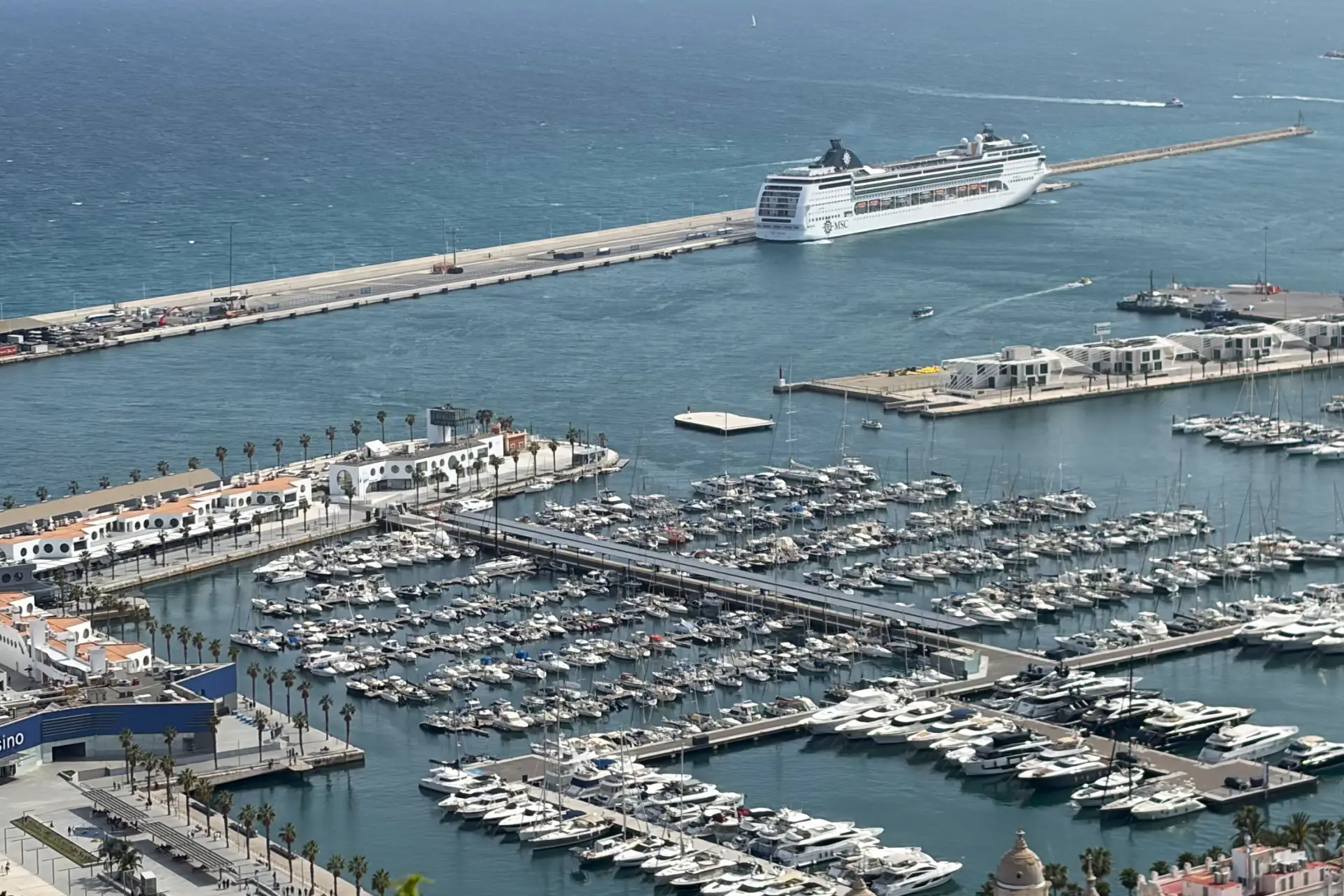
Best Photo and Video Locations at Santa Bárbara Castle
Santa Bárbara Castle is considered one of the most photogenic landmarks in Alicante. Located on top of Mount Benacantil at an elevation of approximately 166 metres above sea level, it offers panoramic views of the city, the harbour, the beaches, and the Mediterranean Sea. For photographers and content creators, the castle provides dozens of excellent shooting locations throughout the year.
The Upper Viewing Platform – La Torreta
The highest point of the fortress provides nearly 360-degree views. From here, visitors can capture some of the finest panoramic images of Alicante, the harbour, and the Costa Blanca coastline.
- Wide-angle city panoramas
- Shots featuring the Mediterranean horizon
- Sunrise photography over the coastline
- Time-lapse recordings of harbour activity
The best time for photography is early morning shortly after the castle opens, when the light is soft and visitor numbers are at their lowest.
Views Over Postiguet Beach
From the south-eastern bastions, visitors can enjoy one of Alicante’s most iconic views: the golden sands of Postiguet Beach, the waterfront promenade, and the Mediterranean Sea.
- Aerial-style photographs of the beach
- Coastal panoramas
- Video footage for social media content
- Sunrise and morning seascape photography
During the first half of the day, sunlight illuminates the beach from the sea side, creating vibrant and colourful images.
Viewpoint Over Alicante Harbour
The north-eastern section of the castle is considered the best location for photographing the harbour and yacht marina. Here, visitors can capture impressive urban and maritime panoramas simultaneously.
- The port and cruise ships
- The yacht marina
- Explanada de España promenade
- Evening city lights
The ideal time for photography is approximately one hour before sunset, when warm light begins to illuminate the city.
The Bastions and Fortress Walls
The historic walls of the castle provide excellent opportunities for atmospheric photography with strong perspective lines. The stone architecture contrasts beautifully with the sea and the modern cityscape.
- Portrait photography
- Historic and medieval-style compositions
- Contrasts between ancient architecture and the modern city
- Walking videos along the defensive walls
Viewpoint Over the Santa Cruz District
This area offers views of Alicante’s oldest neighbourhood, with its whitewashed houses, stairways, and narrow streets. It is one of the best locations for capturing atmospheric urban photography.
- Whitewashed houses of the Old Town
- Red-tiled roofs of the historic centre
- Traditional Alicante street architecture
- Panoramic views of the Santa Cruz district
Best Time for Photography and Videography
For the highest-quality images, it is recommended to shoot during periods of softer natural light.
- Sunrise: minimal crowds and clean natural light
- Golden hour before sunset: warm tones and rich shadows
- Blue hour after sunset: dramatic city illumination
- Winter months: improved visibility due to clearer air conditions
If your goal is to create high-quality photo and video content for a blog, social media platform, or travel website, the ideal option is to visit the castle one to two hours before sunset. During this period, you can capture city panoramas, coastal views, and Alicante’s evening atmosphere in a single visit.
What to See Near Santa Bárbara Castle in Alicante
Santa Bárbara Castle is located in the heart of Alicante, making it an ideal starting point for exploring several of the city’s most important attractions. Most major points of interest are within walking distance and can easily be combined into a single sightseeing route through the historic centre and waterfront.
Alicante Old Town and the Santa Cruz District
The Santa Cruz district (Barrio de Santa Cruz) is located directly at the foot of Mount Benacantil and is considered one of the most charming areas of Alicante. This historic neighbourhood is known for its narrow streets, whitewashed houses, and flower-filled balconies. Traditional Mediterranean architecture has been carefully preserved here, and many walking routes to the castle pass through the district, making it a natural extension of any visit to Santa Bárbara Castle.
- Scenic streets with views of the castle
- Santa María Basilica – the oldest church in the city
- MACA Contemporary Art Museum
- Traditional architecture of historic Alicante
Postiguet Beach
Postiguet Beach (Playa del Postiguet) lies at the foot of Mount Benacantil and is considered Alicante’s main urban beach. Its most distinctive feature is its location in the city centre, immediately beside the castle. One of the most popular routes to the fortress begins here via the castle lift, while the beach itself offers iconic views of the rocky hillside crowned by Santa Bárbara Castle.
- Sandy beach in the city centre
- Views of Santa Bárbara Castle from the shoreline
- Seafront promenade with cafés and restaurants
- Direct access to the castle lift
Explanada de España Promenade
Explanada de España is one of Alicante’s most iconic waterfront promenades, stretching alongside the harbour. It is famous for its distinctive wave-pattern marble mosaic and its rows of palm trees.
After visiting the castle, it serves as a natural continuation of the route, allowing visitors to transition from the historic area to the city’s maritime district.
- Palm-lined promenade along the seafront
- Restaurants and outdoor cafés
- Located next to Alicante Harbour
- Frequent cultural events and fairs
Alicante Central Market
Mercado Central de Alicante is the city’s main market, located in the centre of Alicante near the principal tourist routes. It is an important gastronomic destination featuring a wide range of local products from the Valencia region.
The market is often included in combined “city and castle” itineraries, as it provides an excellent introduction to local cuisine and culinary traditions.
- Fresh Mediterranean seafood and fish
- Traditional Spanish products
- Local gastronomic bars inside the market
- An authentic atmosphere reflecting everyday city life
Frequently Asked Questions About Santa Bárbara Castle in Alicante
Below are some of the most common questions tourists ask about visiting Santa Bárbara Castle (Castillo de Santa Bárbara) in Alicante that have not been fully covered in the main guide.
How Much Does Admission to Santa Bárbara Castle Cost?
Access to the castle grounds, including the viewpoints, bastions, and walking areas, is free of charge. Additional services such as the lift and guided tours may require payment.
Can You Walk Up to the Castle?
Yes, it is possible to reach the castle on foot. The most popular route passes through the Santa Cruz district, although visitors should be prepared for steep inclines and stairways.
Where Is the Entrance to the Castle Lift?
The lift entrance is located at the foot of Mount Benacantil near Postiguet Beach in the central area of Alicante.
How Much Time Is Needed to Visit the Castle?
Most visits take between 1.5 and 2 hours. If you plan to explore the museums and walking routes in greater detail, the visit may extend to approximately 3 hours.
Is the Castle Suitable for Visiting with Children?
Yes, the castle is suitable for family visits. The site offers open spaces, panoramic viewpoints, and rest areas, although visitors should be aware of the significant changes in elevation throughout the complex.
Is the Castle Open All Year Round?
Yes, the castle is open throughout the year, except for certain public holidays and periods of maintenance. Opening hours may vary depending on the season.
When Is the Best Time to Visit the Castle?
The most comfortable times to visit are during the morning and evening. During summer afternoons, temperatures can become quite high because most of the site is exposed to direct sunlight.
Can You Drive Up to the Castle?
Direct vehicle access to the upper levels is restricted. The main ways to reach the castle are on foot, by lift, or via the tourist shuttle service.
Are There Any Cafés or Restaurants Inside the Castle?
Yes, seasonal cafés and refreshment areas operate within the castle grounds. However, their availability may depend on the time of year and visitor demand.
What Views Can Be Seen from the Castle?
The castle offers panoramic views across the entire city of Alicante, including the harbour, the city centre, and the Mediterranean coastline.
Can a Castle Visit Be Combined with Other Attractions?
Yes, the castle can easily be combined with visits to Postiguet Beach, the Old Town, and the Explanada promenade as part of a single sightseeing itinerary.
Are Guided Tours Available at the Castle?
Yes, both self-guided visits and organised guided tours are available. Guided tours provide additional insight into the history and architecture of the fortress.
How Many Questions Do Tourists Typically Ask?
In practice, travellers most frequently ask between 10 and 20 basic questions related to access, opening hours, admission costs, and available routes.
Conclusion
Santa Bárbara Castle (Castillo de Santa Bárbara) in Alicante remains one of the city’s most important landmarks and one of the highlights of the Costa Blanca region. The site combines a rich historical heritage, architectural layers from different eras, and some of the finest panoramic views of the Mediterranean Sea.
Summary of Why the Castle Is Worth Visiting
A visit to the castle allows travellers to see Alicante from an elevation of 166 metres and gain a deeper understanding of the city’s historical development, from the Arab period to its evolution into a modern tourist destination. Thanks to its free admission and convenient location, Santa Bárbara Castle remains one of Spain’s most accessible historic attractions.
- Exceptional panoramic views of the city, harbour, and coastline
- Historical layers spanning from the 9th century to the present day
- Free access to the castle grounds
- Convenient location in the centre of Alicante
Recommendation for Your Alicante Itinerary
A visit to Santa Bárbara Castle is highly recommended as part of any Alicante itinerary, alongside Postiguet Beach, the Santa Cruz Old Town district, and the Explanada promenade. Ideally, the visit should be planned for the morning or around sunset to combine the castle experience with other major attractions throughout the city.
Within a single day, Santa Bárbara Castle can serve as the central highlight of an itinerary, bringing together the historical, cultural, and natural aspects of Alicante into one comprehensive visitor experience.
