

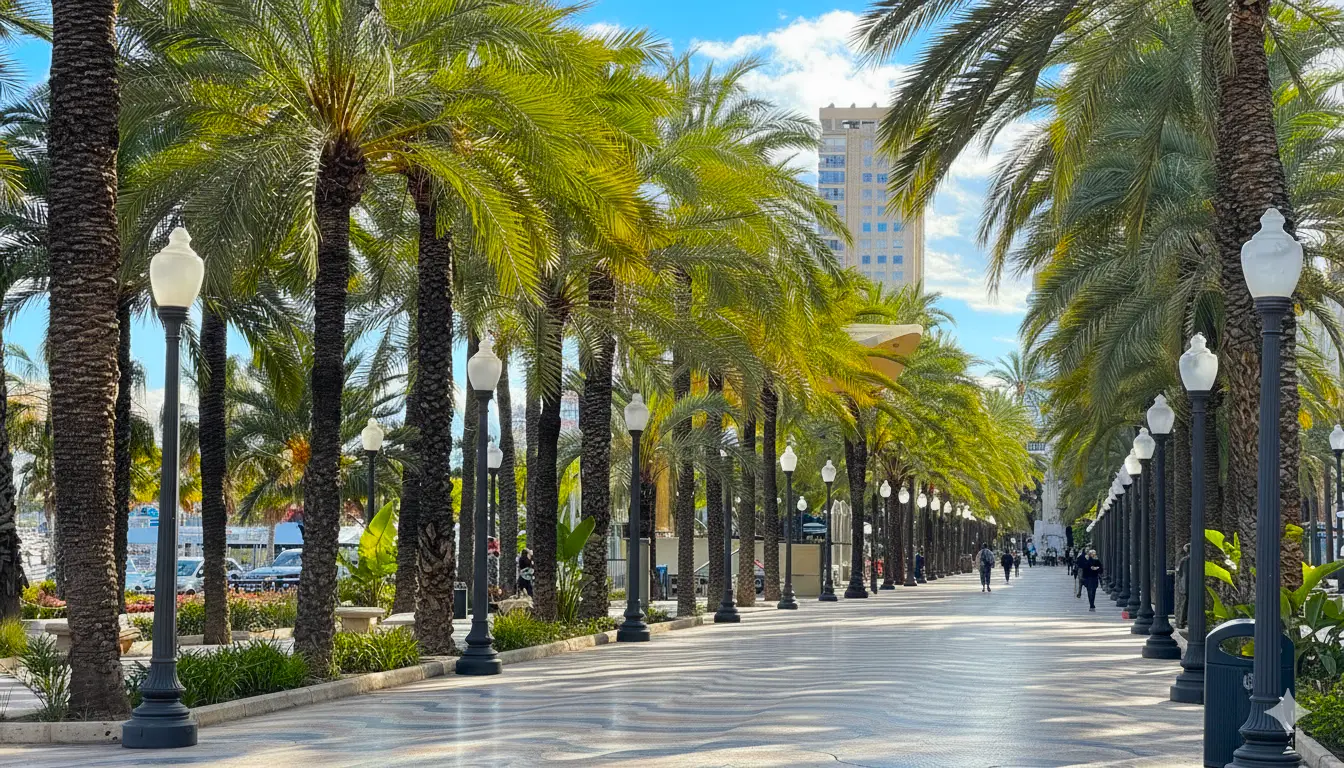
Alicante 2026: Safety from a Real Estate and Urban Analytics Perspective
In 2026, Alicante continues to maintain its position as one of the most stable and balanced real estate markets on Spain’s Mediterranean coast. According to official statistics from Spain’s Ministry of the Interior and international urban safety indices, the city is characterized by a low level of violent crime and a predominance of minor property-related offences, typical of major tourist destinations.
Compared to large metropolitan areas such as Barcelona and Madrid, Alicante shows more moderate crime levels, especially in the category of serious offences. The main risks are localized and situational, typically associated with tourist zones, high population density areas, and certain neighbourhoods with more complex social structures.
For the real estate market, this creates a predictable investment environment: the city remains attractive both for short-term rentals (supported by stable tourism demand) and for long-term residence, including expats, retirees from EU countries, and remote professionals.
Who this Alicante safety analysis is relevant for
- Real estate investors – for assessing neighbourhood liquidity, risk levels, and rental income potential
- Expats and relocators – when choosing a safe and comfortable residential area
- Tourists – to understand real risks and select suitable accommodation zones
- Renters – when comparing districts by price, infrastructure, and safety levels
From a professional development and real estate analysis perspective, the key factor in Alicante is not the overall citywide safety level, but rather the clear differentiation between neighbourhoods.
Thus, in 2026 Alicante should be viewed as a mature and structured market, where safety, urban quality, and investment potential depend directly on specific locations rather than the city as a whole.
Data Sources and Methodology for Alicante Safety Analysis
This Alicante safety overview for 2026 is based on open statistical data, real estate market analytics, and international urban safety indices. The content is informational and analytical in nature, aimed at assessing risks related to living, investment, and short-term stays.
The conclusions are based on aggregated data from official and independent sources, including crime statistics, urban environment reports, and global city safety rankings.
Main information sources
- Numbeo Crime Index – Alicante – international database of user-reported crime and safety perception data
- Spanish Ministry of the Interior – official crime statistics and regional safety reports
- The World Travel Index – international comparative safety rankings for cities and destinations
Methodology of Alicante safety analysis
- analysis of official Spanish crime statistics
- comparison with other major Spanish cities
- assessment of tourism pressure and seasonality
- structural neighbourhood analysis from a real estate perspective
- integration of international safety perception indices
It is important to note that some international rankings (such as user-generated indices) reflect subjective perceptions of safety, while government statistics are based on reported offences. Both approaches are used here to provide a more balanced view.
Data limitations
This analysis is for informational purposes only and does not replace legal or investment advice. Safety levels in Alicante may vary depending on the specific neighbourhood, street, time of day, and seasonal conditions.
When making real estate or relocation decisions, it is recommended to also consider local factors such as property condition, infrastructure, and the current situation in the selected area.
Alicante Crime Rate 2026: Statistics, Safety Ranking and Key Indicators
According to international safety indices and aggregated user data, Alicante in 2026 is classified as a city with a low crime rate and moderately high safety levels. These figures are based on a combination of official statistics and global comparative urban quality rankings.
Based on Numbeo data (aggregated user indicators over recent years), Alicante’s crime index is approximately 34–36 out of 100, corresponding to a “low to moderate crime level”. The safety index is approximately 64–65 out of 100.
- Crime index: ~34.6
- Safety index: ~65.4
- Crime level: low
- Daytime safety: high (~85/100)
- Night safety: moderate to high (~60–62/100)
Compared to other major Spanish cities, Alicante shows similar or more favourable safety indicators. Crime levels are lower or comparable to cities such as Valencia, and daytime safety perception is higher than in many large European urban centres.
Crime structure in Alicante
- petty theft in tourist areas
- pickpocketing in public transport and city centre
- occasional vehicle break-ins
- localized minor social conflicts in certain neighbourhoods
According to provincial crime statistics, around 3,200+ public safety offences were recorded in Alicante province in 2024, with a gradual decline in several categories compared to previous years.
Safety trends and dynamics
- gradual decline in certain property crimes over time
- increase in cybercrime categories (national trend)
- stable safety levels in residential areas
Real estate and lifestyle implications
From a real estate perspective, Alicante can be classified as a stable and safe mid-tier city in Spain. Risks are primarily localized and neighbourhood-dependent rather than citywide.
For investors and residents, this means a predictable environment: high safety in residential and coastal zones, with slightly higher risks concentrated in specific dense urban and tourist-heavy districts.
General Safety in Alicante in 2026
From a real estate market and urban analytics perspective, Alicante in 2026 is classified as a safe mid-sized Mediterranean city. In terms of crime levels, it consistently ranks below major Spanish metropolitan areas such as Barcelona and Madrid, particularly in the segment of violent crime.
Data from the Spanish police and international urban safety indices show that the majority of incidents in the city fall under the category of petty property crime, which is typical for tourist destinations with high seasonal population pressure.
Overall crime level compared to Spain
Within Spain’s safety structure, Alicante is positioned as a city with a moderately low risk level. This means:
- low frequency of violent crimes compared to national metropolitan areas
- moderate level of petty property offences in tourist zones
- stable crime dynamics without sharp negative fluctuations
From a real estate perspective, this creates a predictable environment for investors: the market is not significantly affected by crime-related risks that could impact long-term property values.
Conclusion on safety levels in Alicante in 2026
Alicante in 2026 can be described as a safe city with a predictable risk structure. The main risk profile is not related to violent crime, but rather to petty property offences typical of popular European tourist destinations.
From a real estate and long-term investment perspective, this implies:
- stable housing demand across most districts
- absence of crime factors that significantly affect the property market
- clear local differences between neighbourhoods that are more important than the city average
Therefore, the key factor in assessing safety in Alicante is not the city as a whole, but the specific neighbourhood, type of development, and level of tourist activity.
Crime Structure in Alicante
According to Spanish law enforcement authorities and European urban safety indices, the crime structure in Alicante in 2026 remains typical of a tourist Mediterranean city. It is primarily dominated by non-violent offences, especially property-related theft and situational crime in areas with high population density.
Petty theft in Alicante: where it happens and how to avoid it
Petty theft is the most common type of incident in the city. It is typical for all major European tourist destinations and is directly linked to high tourist density.
- pickpocketing in the historic city centre
- theft of phones and personal belongings on beaches during peak season
- incidents in public transport and transport hubs
From a public safety perspective, this falls into the category of low-level property crime, which does not affect the structural stability of the city but requires basic awareness from both tourists and residents.
To reduce the risk of petty theft in Alicante, it is sufficient to follow basic urban safety practices: do not leave phones, wallets, or documents unattended in public spaces, use bags with secure zippers and keep them close to the body in tourist areas, avoid displaying valuable items (watches, jewellery, electronics) in crowded places, and remain especially attentive on beaches, in public transport, and in the city centre during peak hours. In most cases, these measures are enough to fully prevent typical pickpocketing situations.
Car break-ins in Alicante: where they happen and how to reduce risk
Car break-ins in Alicante are classified as situational property crimes and are not considered a widespread or systemic issue in the city. They are typical of most tourist and coastal regions in Spain, where risk depends directly on parking location, time of day, and visibility of valuables inside the vehicle.
Most incidents occur not in central tourist areas with high surveillance, but in less crowded or poorly lit locations where vehicles are left unattended for extended periods.
Where the risk is higher
- outlying residential areas with low pedestrian traffic
- poorly lit streets and remote parking zones
- long-term street parking without security
- isolated areas near beaches during the low season
Main types of incidents
- window breaking when valuables are visible inside the car
- attempts to open unlocked vehicles
- theft of bags, electronics, or navigation devices
In most cases, these incidents are opportunistic rather than targeted, meaning they are driven by opportunity rather than a specific focus on a particular vehicle or owner.
How to reduce the risk
From a practical urban safety and real estate perspective, the risk of car break-ins in Alicante can be significantly reduced through simple precautions:
- do not leave valuables visible inside the vehicle
- use secured parking facilities for long stays
- park in well-lit and busy areas
- always ensure the vehicle is properly locked
Car break-ins in Alicante do not represent a significant risk for residents or tourists when basic precautions are followed. From an urban environment perspective, this is a localized and manageable type of offence typical of all Mediterranean tourist cities.
Domestic incidents in Alicante: nature and real level of risk
Domestic incidents in Alicante refer to localized social situations that occur in everyday urban life and are not associated with criminal activity in the strict sense. According to general urban safety structures in Spain, such cases are common in all cities with high population density and diverse social composition.
In Alicante, these incidents are generally non-systemic and are not concentrated at the city level. They occur locally in specific residential districts where housing density is higher, rental housing is more common, and social diversity is more pronounced.
Main types of domestic incidents
- local disputes between neighbours (noise, shared spaces, parking issues)
- situational disagreements in apartment buildings
- complaints related to disturbances in the evening
- isolated incidents linked to increased social activity in specific buildings or streets
It is important to understand that most of these situations are resolved at the level of municipal services, property management companies, or civil mediation and rarely escalate into serious offences.
Where such cases are more common
From an urban structure perspective, domestic incidents are more frequently recorded in areas with:
- high-density apartment housing
- a significant share of rental properties
- more affordable housing segments
In contrast, districts with higher income levels and a greater proportion of owner-occupied housing tend to experience fewer such incidents.
Importance for the real estate market
From a professional real estate analysis perspective, domestic incidents in Alicante reflect not a crime issue, but socio-economic differentiation between neighbourhoods. This is a key factor considered when evaluating:
- quality of residential environment
- stability of long-term rental demand
- attractiveness for family living
- liquidity of properties on the secondary market
Thus, such incidents are not an indicator of citywide danger, but rather reflect differences between housing segments and levels of urban development in specific districts.
Night risks in Alicante: neighbourhood safety and impact on lifestyle and real estate
Night risks in Alicante in 2026 are limited and localized and are primarily associated with areas of active night-time economy. These include districts with bars, restaurants, tourist streets, and entertainment venues. This structure is typical for most Mediterranean tourist cities in Spain and does not reflect a high overall level of danger.
According to general urban practice and European observations of tourist centres, most night-time incidents in Alicante fall into the situational category and are generally not associated with serious crime.
Main night activity zones
- areas with high concentration of bars, restaurants, and clubs
- central tourist streets and waterfront areas in the evening and at night
- old town zones with active evening economy
In these locations, higher population density and tourist presence may lead to occasional incidents, but they are episodic and do not form a persistent criminal environment.
Typical night-time incidents
- situational conflicts related to alcohol consumption
- public order disturbances in tourist zones
- isolated minor offences in crowded areas
It is important to emphasize that such events are generally limited in time (late evening and night hours) and geography, concentrated in specific entertainment zones.
Seasonality of night risks
Night-time incidents in Alicante show clear seasonality. During the summer tourist season, increased pressure on nightlife infrastructure can lead to a rise in situational conflicts. In the low season, this activity decreases significantly.
Impact on the real estate market
From a professional real estate analysis perspective, night risks in Alicante have a limited impact on long-term property values. They are mainly relevant for:
- short-term tourist rentals (Airbnb and similar platforms)
- properties in the city centre and nightlife districts
- investment yield analysis in tourist areas
However, for long-term living and real estate investment, the key factor is not nightlife activity but overall neighbourhood infrastructure, social profile, and daytime safety levels.
Thus, night risks in Alicante should be viewed as a localized and manageable aspect of the urban environment, rather than a systemic threat to the city or its real estate market.
Alicante Crime Statistics (2024–2026)
From the perspective of professional real estate analysis and urban risk assessment, Alicante between 2024 and 2026 shows a stable and predictable crime level without significant negative or crisis-related trends. According to official Spanish crime statistics (Ministerio del Interior) and European city safety indices, the structure of offences remains typical for a Mediterranean tourist region.
A key characteristic of Alicante is that the majority of recorded incidents fall under the category of property crime, while the level of violent crime remains relatively low.
General crime trends in Alicante
- stable overall crime levels without sharp fluctuations
- predominance of minor property-related offences
- seasonal increase in incidents during the tourist period (spring–summer)
- no systemic growth in serious violent crime
From a real estate perspective, this creates a predictable environment: safety levels do not negatively affect long-term property values or the city’s investment attractiveness.
Comparison of Alicante with other Spanish cities
To properly evaluate Alicante, it is important to place it within the broader context of Spain’s major cities, where crime structures are similar but often more pronounced.
Valencia
Valencia has a comparable overall crime level, but it is characterised by higher population density and a larger metropolitan structure. This leads to more frequent petty offences in certain districts.
Barcelona
Barcelona traditionally shows a higher rate of property crime, especially pickpocketing, due to extremely high tourist density and concentrated tourist zones.
Madrid
Madrid, as the largest city in Spain, has a broader absolute volume of crime; however, when adjusted for population density, the indicators are comparable to other major metropolitan areas.
Against this background, Alicante appears as a calmer and more balanced city with lower pressure on its tourist infrastructure and a more even distribution of risks.
Conclusion on safety in Alicante
Between 2024 and 2026, Alicante demonstrates a stable safety model typical of a developed medium-sized tourist city. Crime is predominantly of a minor property nature, and its level remains lower or comparable to Spain’s largest cities.
For investors and property buyers, this indicates the absence of crime-related factors that could significantly impact asset values, while still acknowledging local differences between neighbourhoods and tourist zones.
Safest Neighbourhoods in Alicante for Living
From a real estate and urban analytics perspective, the safest neighbourhoods in Alicante in 2026 are determined by three key factors: the socio-economic profile of residents, the quality of urban infrastructure, and the level of tourist activity. The most stable and safest areas generally coincide with higher property values and a lower proportion of social housing.
Below are the neighbourhoods that, in professional real estate practice, are considered the safest and most comfortable for permanent residence and investment.
1. Playa de San Juan: the safest coastal area in Alicante for living
Playa de San Juan is considered one of the most prestigious and safest districts in Alicante. It is a modern coastal area with well-developed residential infrastructure, high urban quality, and strong demand for real estate.
Safety level
The area is characterised by a low level of recorded offences. The main reason is the socio-economic profile of residents (families, expats, property owners) and the limited presence of socially disadvantaged housing.
Infrastructure
- modern residential complexes
- well-developed transport connections
- schools, healthcare facilities, and commercial areas
- a long, well-maintained beachfront
Suitable for
- families with children
- expats and relocating professionals
- long-term rental investors
- buyers seeking coastal property
From a real estate perspective, Playa de San Juan is a highly liquid and stable area with consistent demand and minimal downside risk in property value.
2. Centro Alicante: central district with high quality of life and tourist safety
The city centre of Alicante is a functionally mixed district with high urban activity, strong tourist flows, and well-developed commercial infrastructure. Its safety level depends heavily on time of day and specific streets.
Day and night dynamics
During the day, the city centre is considered highly safe due to constant pedestrian activity, tourism, and police presence. At night, certain streets may become less comfortable due to concentrations of bars and entertainment venues.
Tourist-related risks
- pickpocketing in crowded tourist areas
- situational incidents during night hours
- increased activity around bars and restaurants
From a real estate perspective, the city centre is a highly liquid area, especially for short-term rentals, but requires careful micro-location selection.
3. Albufereta and Cabo de las Huertas: prestigious and quiet coastal areas in Alicante
Albufereta and Cabo de las Huertas are among the most peaceful and upscale residential areas in Alicante. Located along the coastline, they are characterised by low-density development and a high level of privacy.
Area characteristics
- primarily low-rise and high-end residential development
- limited tourist traffic
- high proportion of permanent homeowners
- well-developed coastal infrastructure
Safety level
These areas show some of the lowest crime rates in the city. This is due to the socio-economic profile of residents, high property values, and a controlled urban environment.
From an investment perspective, these zones belong to the premium segment, where value is driven not only by coastal location but also by long-term safety reputation and quality of life.
Is the centre of Alicante dangerous for tourists in 2026?
From a urban safety and short-term rental market perspective, the centre of Alicante (Centro and Casco Antiguo) in 2026 is generally considered a safe area, especially during daytime hours. It is one of the most active and well-monitored districts in the city, concentrating tourism, retail, restaurants, and administrative services.
However, as in most tourist centres in Southern Europe, risk levels depend not on overall crime rates but on situational street crime linked to pedestrian density and tourist activity.
Daytime safety in central Alicante
During the day, the city centre is characterised by a high level of safety. This is due to constant pedestrian flow, active commercial activity, and visible public services.
- high pedestrian traffic reduces the likelihood of street incidents
- strong tourism infrastructure and natural surveillance
- regular police patrols in key areas
From a real estate and tourism rental perspective, daytime activity makes the centre one of the most liquid and in-demand areas in the city.
Night-time risk zones in central Alicante
At night, the safety structure of the centre becomes more uneven. Risks are concentrated not across the entire district but in specific streets with a high density of bars and nightlife venues.
- streets with concentrated nightlife economy
- tourist zones with high evening pedestrian density
- certain areas of the old town with narrow streets and reduced visibility
It is important to note that this is not a systemic safety issue but rather localized high-activity zones, typical for most Mediterranean tourist cities.
Pickpocketing and tourist scenarios in central Alicante
The main type of incident in central Alicante is petty property crime, especially pickpocketing. This is directly linked to tourist density and typical behavioural patterns in urban tourist areas.
- theft of phones and wallets in crowded areas
- incidents in outdoor cafés and terraces
- situations in public transport and routes to beaches
From an international perspective, such risks are typical for major tourist cities and do not indicate high criminal danger, but rather situational street crime.
Safety recommendations for tourists in central Alicante
To minimise risks in central Alicante, it is sufficient to follow basic urban safety measures similar to other European tourist destinations.
- keep personal belongings under control in crowded areas
- avoid displaying valuable items (phones, jewellery)
- use well-lit and busy streets at night
- do not leave belongings unattended in outdoor cafés
From a real estate and tourism perspective, the city centre remains a highly liquid area. Its attractiveness for short-term rentals compensates for localized risks typical of all major European tourist centres.
The centre of Alicante in 2026 cannot be considered a dangerous area. It is a safe and well-managed urban environment with localized night-time risk zones typical of tourist districts. When basic precautions are followed, it remains comfortable for both tourists and long-term residents.
Alicante High-Risk Areas 2026: Overview, Characteristics and Safety Levels
From a professional real estate and urban environment analysis perspective, Alicante does not have “dangerous neighbourhoods” in the absolute sense. However, there are several districts in 2026 that are classified as areas of higher social and situational risk. This does not imply high danger to personal safety, but rather a higher likelihood of petty offences, social conflicts, and general socio-economic variability.
These differences are mainly driven by housing stock structure, income levels, proportion of social housing, and overall urban infrastructure quality.
Virgen del Remedio Alicante: high-risk area profile and living conditions
Area characteristics
Virgen del Remedio is one of the well-known residential districts in northern Alicante. It is predominantly composed of mid-to-late 20th-century apartment buildings and offers more affordable housing stock.
- high residential density
- significant proportion of social and rental housing
- diverse socio-economic population
- limited new development
Safety level
From a safety perspective, the area is classified as having a moderate elevated risk level. Incidents are primarily related to social and domestic situations rather than serious crime.
- localized domestic disputes
- occasional property-related offences
- social incidents within residential environments
It is important to note that the district remains fully residential and functional, and is not unsafe in absolute terms. Risks are localized and situational.
Carolinas Altas and Carolinas Bajas Alicante: moderate-risk area profile and living conditions
Area characteristics
Carolinas is a dense urban district located close to the city centre of Alicante. It features mixed residential and commercial use, active urban life, and more affordable housing prices.
- mixed residential and commercial character
- high population density
- proximity to the city centre
- older but functional housing stock
Safety level
The area is classified as having a medium risk level. Key factors are related to density and active urban environment.
- pickpocketing near busy streets
- domestic incidents in apartment buildings
- situational conflicts in the evening
Juan XXIII Alicante: high-risk area profile and living conditions
Area characteristics
Juan XXIII is a residential district with social housing and high population density. It was developed as part of large-scale urban expansion and has a lower average income level compared to coastal districts.
- predominantly apartment buildings
- social housing stock
- limited tourist activity
- basic local infrastructure
Safety level
The area is classified as having an elevated social risk level, but without signs of severe criminal conditions.
- localised domestic conflicts
- occasional minor offences
- uneven social structure
Overall conclusion on high-risk areas in Alicante 2026
High-risk areas in Alicante are not unsafe in an absolute sense. Their characteristics are primarily related to social structure, housing density, and income levels. It is important to understand that even in these districts there is no systemic threat level comparable to problematic urban areas in other countries.
From a real estate perspective, these areas are generally part of the affordable segment and may be attractive for rental investment, although they require more careful micro-location selection and property evaluation.
Real Estate Market Conclusion
Neighbourhoods such as Virgen del Remedio, Juan XXIII, Colonia Requena, and parts of Carolinas are not “dangerous” in absolute terms, but belong to the affordable housing segment with lower infrastructure quality and investment attractiveness.
When purchasing property, the key factor is not only the district but also the specific condition of the property, the exact street, and rental potential. In Alicante, differences between adjacent blocks can be significantly more important than the general reputation of the neighbourhood.
Tourist Safety in Alicante: Real Risks in 2026
From the perspective of urban safety practice and tourist flow analysis, Alicante in 2026 is considered a safe destination in Southern Europe. The main risks for tourists are not related to violent crime, but rather to petty property crime and situational incidents in areas with high concentrations of people.
This risk structure is typical for popular coastal cities in Spain and is directly linked to seasonality, tourist density, and behavioral factors.
Theft on Public Transport and Beaches
The most common risk for tourists in Alicante is related to pickpocketing and opportunistic theft in public spaces. This is typical across the entire Mediterranean region with high tourist volumes.
Public Transport
- pickpocketing incidents on buses and TRAM Metropolitano tram lines
- incidents during peak hours and on popular routes to beaches
- theft around stations and transport interchanges
Beaches
- theft of unattended personal belongings
- incidents during peak season (summer months)
- opportunistic theft while swimming
From a real estate and urban environment perspective, these risks do not affect the structural safety of neighborhoods but are considered when evaluating the tourist attractiveness of a location.
Night Walks
Night-time safety in Alicante depends on the specific district and street environment. In most central and coastal areas, the city remains active and relatively safe, although the risk profile changes as tourist density decreases.
- higher concentration of people in bar and restaurant districts
- localized incidents linked to alcohol consumption
- less comfortable areas in narrow streets of the old town
For tourists, the key safety factor is using well-lit and populated routes, which aligns with general safety practices in European tourist cities.
Tourist Concentration Areas
The main tourist zones in Alicante are both the most controlled and the most exposed to petty property crime due to high pedestrian density.
- historic city center (Casco Antiguo)
- seafront promenade and port area
- beach zones during high season
- shopping streets and local markets
It is important to understand that high tourist density itself creates conditions for pickpocketing but does not indicate a high overall crime level in the city.
Taxis, Transport, and Fraud Risks
Transport-related risks in Alicante are generally low; however, as in any tourist destination, isolated cases of unfair practices may occur.
Public Transport
- TRAM and city buses are considered safe and well-regulated
- main risk is theft, not the transport system itself
Taxis and Private Transport
- official taxis operate under regulated licenses and fare systems
- rare cases of overcharging may occur with unlicensed drivers
Tourist Fraud
- occasional overpricing in tourist-heavy areas
- attempts to sell unnecessary services in crowded zones
From a real estate perspective, these factors do not affect long-term investment attractiveness, as they are situational and non-systemic.
Alicante in 2026 remains a safe tourist city with a low level of serious threats. The main risks are related to petty property crimes concentrated in tourist zones and high-traffic public areas.
With basic precautions, the city remains a comfortable and predictable destination for both short-term visits and long-term residence.
Where to Live in Alicante 2026: Neighborhoods, Safety, and Purpose-Based Recommendations
From a real estate market perspective, Alicante in 2026 demonstrates a clear spatial segmentation. This means that location choice depends not only on budget but also on lifestyle goals: family living, investment, remote work, or studying.
Below is a professional breakdown based on demand patterns, infrastructure quality, property liquidity, and neighborhood stability.
Best Areas in Alicante for Families in 2026: Safety and Quality of Life
For family living, priorities include safety, access to schools, healthcare infrastructure, and a quiet residential environment. In Alicante, the most stable areas in this segment are coastal and well-developed districts with low social housing density.
- Playa de San Juan – modern district with a strong family-oriented population, schools, and developed infrastructure
- Cabo de las Huertas – upscale residential area with villas and low-density development
- Albufereta – quiet coastal district with moderate prices and good access to the city center
These areas are characterized by stable safety levels and consistent long-term rental demand, which additionally supports property values.
Best Areas in Alicante for Real Estate Investment in 2026
Investment attractiveness in Alicante primarily depends on neighborhood liquidity, tourism flow, and rental potential (short-term or long-term). The most effective zones combine strong demand and stable occupancy rates.
- Centro (city center) – high liquidity, strong tourist demand, developed short-term rental market
- Playa de San Juan – stable long-term rental demand and strong price resilience
- Carolinas (upper areas) – affordable entry point with growth potential and rental demand
From an investment perspective, the city center and coastal districts form the core of the income property market, while more affordable districts are used for lower-capital entry strategies.
Best Areas in Alicante for Remote Work and Comfortable Living in 2026
For digital nomads and remote professionals, key factors include stable infrastructure, transport connectivity, housing quality, and overall living comfort.
- Playa de San Juan – optimal balance between comfort, infrastructure, and proximity to the sea
- Centro (quiet zones) – urban convenience and access to all services
- Albufereta – quiet environment with good transport links and low noise levels
These areas provide stable living and working conditions while maintaining access to urban infrastructure and international communities.
Best Areas for Students in Alicante 2026: Rent and Affordability
The student segment focuses on affordable housing, transport connections to universities, and basic daily infrastructure.
- Carolinas (upper and mid areas) – affordable housing close to the city center
- Benalúa – balanced district with good transport accessibility
- San Blas – quiet residential area with moderate prices and convenient access to the center
These districts are the most rational choices in terms of rent affordability, transport connectivity, and urban infrastructure.
Alicante’s real estate market in 2026 is clearly structured by usage profiles. Coastal and central districts form the premium and investment segment, while peripheral areas provide affordable housing and stable long-term demand.
A well-informed neighborhood choice in Alicante directly influences both quality of life and real estate investment returns.
Factors Influencing Neighborhood Safety in Alicante
From the perspective of urban analytics and the real estate market, the level of safety across Alicante’s neighborhoods is not determined by random circumstances, but by a stable combination of socio-economic and spatial characteristics. In 2026, the city’s structure remains typical of Mediterranean tourist metropolitan areas: safety varies significantly from one district to another and depends on four key factors.
Social Factor
The socio-economic profile of the population is one of the main indicators of neighborhood stability. In real estate terms, this parameter is directly linked to housing prices, employment levels, and the quality of the residential stock.
- income levels of residents
- share of social housing within the district
- employment stability and population structure
- quality and age of the housing stock
Neighborhoods with a higher socio-economic profile (for example, coastal and newly developed residential areas) tend to demonstrate lower levels of petty crime and a more stable urban environment.
Population Density
Building density and population concentration influence the level of anonymity in the urban environment and the intensity of street activity. In cities like Alicante, this factor is particularly important for assessing local differences between districts.
- high density – increased casual interactions and street activity
- low density – more private and controlled environment
- older districts often have denser and more complex street layouts
From a real estate perspective, low and medium-density areas are generally perceived as more comfortable for long-term residential living.
Tourist Flow
Alicante is a tourist city, and the level of tourist activity directly influences the type and frequency of criminal incidents. This factor is especially relevant in central and coastal areas.
- increase in pickpocketing in high-tourist-density zones
- seasonal fluctuations in street activity levels
- higher infrastructure pressure during the summer period
It is important to understand that a high tourist flow does not necessarily indicate low safety overall, but rather changes the nature of risks: they become more situational and property-related.
Night Economy
The development of the night-time economy (bars, restaurants, clubs) has a noticeable impact on the localized safety of certain districts. In Alicante, this factor is particularly relevant in the city center and tourist streets.
- concentration of entertainment venues increases nighttime activity
- isolated conflict situations related to alcohol consumption may occur
- higher noise levels and population density in the evening
From a real estate perspective, areas with a developed nightlife economy often generate strong short-term rental yields, but require more detailed street-level analysis within the district.
Neighborhood safety in Alicante is shaped by a combination of socio-economic profile, population density, tourist pressure, and nightlife activity. These factors do not operate independently but overlap, creating localized variations within the city.
For evaluating a district in a real estate context, it is essential to consider not only its name, but also the specific street, type of development, and functional role of the area within the urban structure.
Practical Safety Tips in Alicante 2026
From the perspective of urban analysis and real estate practice, Alicante is considered a safe European tourist city where the main risks are not related to violence, but to situational property-related offenses. This means that safety depends largely on personal behavior rather than the city itself.
Below are practical recommendations based on typical urban scenarios in Southern Spain and tourist flow dynamics.
How to Avoid Theft
The most common type of incident in Alicante is pickpocketing in crowded areas. These incidents are typical of tourist zones and public transport, especially during high season.
- do not carry phones or wallets in back pockets or external backpack pockets
- use bags with secure zippers and keep them in front of you in crowded areas
- do not leave personal belongings unattended in cafés or terraces
- minimize the number of valuable items when walking in tourist zones
From a behavioral safety perspective, most incidents are situational and can be prevented through basic awareness.
Safe Areas at Night
Night safety in Alicante depends on the specific district and its level of activity. Overall, main residential and coastal areas remain calm, while risks concentrate in specific tourist streets with high bar density.
- Playa de San Juan – stable and quiet coastal residential area
- Albufereta – low nightlife activity and residential character
- Cabo de las Huertas – upscale low-density area with high privacy
- central tourist streets – require basic caution at night
The general recommendation from an urban safety perspective is to choose well-lit and populated routes and avoid isolated narrow streets late at night.
Transport
Alicante’s transport system includes the TRAM network, buses, and taxis. Overall, it is considered safe and well-regulated.
- TRAM and buses are safe, regularly monitored, and widely used
- main risk is related to pickpocketing during peak hours, not transport infrastructure
- official taxis operate under regulated tariffs
From an infrastructure standpoint, transport is not a high-risk factor but rather a standard-awareness zone typical of European tourist cities.
Beaches and Tourist Areas
Alicante beaches and main tourist zones are safe, but they are also high-density public spaces, which increases exposure to minor property crimes.
- do not leave belongings unattended while swimming
- carry only essential valuables to the beach
- be attentive in popular areas (Explanada, Postiguet, San Juan)
- avoid displaying expensive accessories in tourist zones
From a real estate perspective, strong tourist activity in coastal areas positively impacts investment attractiveness, but requires awareness of short-term behavioral risks.
Safety in Alicante in 2026 is largely determined not by the city itself, but by individual behavior in specific situations. With basic urban safety precautions, the city remains comfortable and predictable for both living and tourism.
Conclusion
From a professional real estate and urban safety perspective, Alicante in 2026 can be classified as a stable and safe medium-sized Mediterranean city. It does not face systemic crime issues and demonstrates a predictable risk structure typical of European tourist destinations.
The City is Generally Safe
The overall safety assessment of Alicante remains positive. The level of violent crime is low, while the majority of incidents are related to petty property offenses typical of tourist cities.
- low level of violent crime
- stable crime dynamics without sharp deterioration
- controlled urban environment in central and tourist areas
For the real estate market, this translates into a stable demand environment where safety is not a factor reducing investment attractiveness.
Risks Are Local, Not Systemic
A key characteristic of Alicante is that risks are unevenly distributed and highly localized. They concentrate in specific scenarios and areas rather than affecting the city as a whole.
- pickpocketing in tourist zones and public transport
- night-time incidents in nightlife districts
- socially more complex peripheral neighborhoods
It is important to emphasize that these risks do not form a unified crime pattern and do not affect the overall stability of the city as a place to live or invest.
Choosing the Right Neighborhood Defines Quality of Life
In Alicante, the decisive factor for safety and comfort is not the city itself, but the specific neighborhood. Differences between districts can be more significant than differences between cities.
- coastal and new districts (Playa de San Juan, Cabo de las Huertas) offer high safety and quality of life
- central areas require awareness of tourism and nightlife dynamics
- some peripheral districts have lower prices but different social profiles
In professional real estate practice, neighborhood selection is estimated to determine up to 80% of perceived safety, comfort, and long-term property liquidity.
Final Assessment
Alicante in 2026 is a safe, stable, and investment-attractive city with a clearly defined neighborhood structure. With the right location choice, it is suitable both for permanent residence and long-term real estate investment, including rental income and capital appreciation.
Tags: alicante safety 2026, alicante crime rate 2026, is alicante safe for tourists, is alicante safe to live, alicante dangerous areas, safest neighborhoods in alicante, worst areas in alicante, alicante crime statistics, alicante safety index, living in alicante safety, alicante expat safety, alicante night safety, alicante pickpocketing, alicante petty crime, alicante neighborhoods guide, best areas to live in alicante, alicante real estate safety, alicante investment neighborhoods, alicante family friendly areas alicante, alicante expat neighborhoods, alicante tourist safety tips, alicante beach safety crime, alicante centro safety, playa de san juan safety, cabo de las huertas safety, albufereta safety, virgen del remedio crime, carolinas alicante safety, juan xxiii alicante safety, alicante nightlife safety, alicante transport safety, is alicante safe at night, alicante walking alone safety, alicante scams tourists, alicante theft risk, alicante police presence, alicante safest districts map, alicante urban safety analysis, alicante housing safety zones, alicante rental safety alicante, alicante cost of living and safety, alicante relocation guide safety, alicante europe safety ranking, spain alicante crime comparison, valencia vs alicante safety, barcelona vs alicante safety, safest coastal cities spain, alicante property investment safety, alicante neighborhood risk map, alicante expat guide 2026
