


Moraira (Costa Blanca): best beaches, coves and what to see in 2026
Despite its compact size, Moraira offers a complete range of experiences for travellers. The town is ideal for family holidays, romantic getaways and trips where you want to combine beaches, walks, nature, gastronomy and a relaxed, cosy atmosphere. In this article, we explore in detail the best places in Moraira worth visiting to truly experience this small but incredibly charming corner of the Costa Blanca.
Where Moraira is located and how it differs from other Costa Blanca resorts
Moraira is a small coastal resort on the northern Costa Blanca, located in the province of Alicante, between the popular destinations of Jávea and Calpe. The town is part of the Teulada-Moraira municipality and lies at a similar distance from both Alicante and Valencia, making it a convenient base for exploring the region.
Moraira location on the map and how to get there (Alicante, Valencia)
Moraira is situated on the Mediterranean coast, approximately 80 km from Alicante and around 100 km from Valencia. The easiest way to get there is by car: the drive from Alicante Airport takes about 1 hour and 15 minutes, and from Valencia around 1.5 hours.
The resort is connected to the main transport routes of the region, including the AP-7 motorway and the coastal N-332 road, which makes it easy to combine a stay here with trips along the Costa Blanca.
The atmosphere of Moraira: a peaceful resort without mass tourism
Unlike Benidorm and other large-scale resorts, Moraira preserves the atmosphere of a secluded and more “premium” destination. It was once a fishing village that developed under strict building regulations – there are almost no high-rise buildings here, and the natural landscape remains well preserved.
The resort is known for its calm atmosphere, clean beaches and absence of mass tourism. As a result, Moraira is often chosen by families, couples and travellers seeking an alternative to the busier towns of the Costa Blanca.
When to visit Moraira in 2026 (weather and seasonality)
Moraira has a typical Mediterranean climate: more than 300 sunny days per year, mild winters and warm summers. Winter temperatures rarely drop below +12°C, while in summer they stay around +28–30°C, with the sea breeze making the heat comfortable.
The best time for a beach holiday is from late June to September, when the sea reaches pleasant temperatures. Spring and autumn (April–June and September–October) are ideal for walking, excursions and active holidays without heat or tourist crowds.
In 2026, Moraira remains a year-round destination: in winter it attracts visitors with its mild climate and peaceful atmosphere, while in summer it offers clean beaches and crystal-clear sea.
Best beaches in Moraira (Costa Blanca, Spain): beach guide 2026
Moraira is considered one of the most comfortable resorts on the Costa Blanca thanks to its combination of sandy beaches and picturesque coves. The main beaches – Playa de l’Ampolla, Playa del Portet and Les Platgetes – regularly receive the Blue Flag for water quality, safety and infrastructure.
Playa de l’Ampolla: main town beach in Teulada-Moraira
Playa de l’Ampolla in Moraira on Google Maps: view on map
This is the main and most popular beach in the town, loved by both locals and visitors. Playa de l’Ampolla is located at the foot of Moraira’s iconic landmark – the historic castle.
The beach is 250 metres long and around 30 metres wide – a lively spot popular with both locals and tourists. It features a wide sandy shoreline, soft golden sand and a gentle slope into the sea, making it ideal for families with children. Thanks to breakwaters, the water remains calm even in windy conditions, attracting swimmers from early morning until late evening.

The infrastructure is well developed: lifeguards are on duty throughout the season, and there are showers, relaxation areas, and rental points for umbrellas and sunbeds. Along the promenade you will find cafés and restaurants where you can enjoy local cuisine, cocktails or simply a coffee with sea views. In the morning, L’Ampolla is especially beautiful – sunlight reflects off the castle walls and the water, creating a bright yet soft glow. In the evening, it is perfect for a walk along the promenade, listening to the waves and watching the town life.
For families, this beach is a real gem – calm water, a spacious sandy shore and full amenities create ideal conditions for a relaxing day. Many visitors consider L’Ampolla their “number one beach” in Moraira thanks to its beauty, convenience and atmosphere.
Playa del Portet Moraira (Costa Blanca): a scenic cove with turquoise water
Playa del Portet on Google Maps: view on map
Playa del Portet is one of the most picturesque coves on the coast. This small natural lagoon in the shape of a crescent, with white sand and crystal-clear turquoise water, resembles a miniature Caribbean beach. Surrounded by cliffs and vegetation, Portet offers a sense of protection and seclusion. The calm water makes it ideal for SUP surfing, kayaking, snorkelling and swimming.
Along the bay there are small cafés and restaurants with cosy terraces offering stunning sea views. Many travellers prefer to spend their mornings here – the sea is smooth, the air fresh, and the sense of tranquillity makes Portet one of Moraira’s most peaceful spots.

From Portet there are excellent views of Cap d’Or headland, a striking rocky formation that is a natural symbol of the area. In the evening, the water turns soft shades of pink and gold, making it a favourite spot for romantic walks and photography. Even in peak season, Portet retains its intimate and peaceful character.
Playa Les Platgetes (Moraira): small coves in the centre of Moraira
Les Platgetes on Google Maps: view on map
Playa Les Platgetes is one of the most convenient and atmospheric beach areas in Moraira on the Costa Blanca. It consists of two small coves combining sandy sections and rocky areas. Thanks to this natural layout, it offers a peaceful and secluded atmosphere despite being close to the town centre.
In 2026, Les Platgetes remains a well-equipped beach with seasonal lifeguards, showers, easy access to the water and coastal walking paths. It is especially popular with those who want quick access to the sea without travelling far, as well as locals who appreciate its tranquillity compared to larger regional beaches.
One of its key features is the seaside promenade with small green areas and viewpoints. From here, you can enjoy beautiful views of the Mediterranean Sea and the rocky coastline of Moraira, especially in the morning and evening light when the landscape becomes particularly striking.
Thanks to its clear water and mix of sand and rock, Les Platgetes is suitable for relaxed swimming and snorkelling. It offers a good balance between infrastructure and a more natural, less crowded atmosphere.
Beach infrastructure in Moraira: parking, restaurants and sunbed rental
All main beaches in Moraira are well equipped and suitable for comfortable holidays in 2026. In high season (June to September), Playa de l’Ampolla, Playa del Portet and Les Platgetes have lifeguards on duty, as well as sunbeds and umbrellas available for rent. Most beaches also offer:
- parking areas near the coastline;
- restaurants and beach bars;
- showers, toilets and accessibility for people with reduced mobility;
- water sports rentals (kayaks, paddle boards);
Thanks to this combination of infrastructure and natural beauty, Moraira’s beaches are considered among the most convenient and safest on the Costa Blanca.
Hidden coves of Moraira: wild nature and the best snorkelling spots
The Moraira area on the Costa Blanca features several natural coves with minimal development, rocky shores and crystal-clear water. These spots are among the most scenic on the coast and are popular with snorkelling enthusiasts, hikers and those seeking tranquillity. Below are three key coves relevant for visiting in 2026.
Cala Llebeig near Moraira: wild Costa Blanca cove for trekking and seclusion
Cala Llebeig on Google Maps: view on map
Cala Llebeig is a secluded natural cove on the coastline between Moraira and Benissa in the northern Costa Blanca. It is one of the least developed tourist spots in the region, preserving a completely natural landscape of cliffs, rocky shore and no urban development.

The cove can only be reached on foot via a coastal trail passing through cliffs and Mediterranean vegetation. The route requires moderate fitness, but offers panoramic views of the coastline and nearby coves. This makes Cala Llebeig especially popular among hikers and active travellers.
The beach is rocky, with small flat areas by the water, and the sea is highly transparent. The absence of infrastructure keeps it completely natural – there are no cafés, sunbeds or lifeguards, so visitors must come prepared.
In 2026, Cala Llebeig remains one of the key natural highlights near Moraira for those seeking a wilder and more authentic side of the Costa Blanca.
Cala Andragó (Moraira, Costa Blanca): rocky cove ideal for snorkelling
Cala Andragó on Google Maps: view on map
Cala Andragó is one of the most accessible and popular coves in the Moraira area on the Costa Blanca. It is located between the town centre and the direction of Calpe, making it convenient for both locals and tourists. It is a compact rocky cove with clear water and a calm atmosphere outside peak hours.
Thanks to its rocky seabed and transparent water, Cala Andragó is considered one of the best snorkelling spots in the area, especially in the morning when the sea is calm and visibility is at its best.
Unlike wilder coves, Cala Andragó has nearby infrastructure, including restaurants, walking areas and easy access to the sea. This makes it a comfortable option for a relaxed beach experience without long walks or difficult routes.
In 2026, Cala Andragó remains a key attraction in Moraira thanks to its balance between natural scenery and convenience, appreciated by travellers seeking a calm yet accessible seaside experience.
Cala Punta Estrella (Cap Blanc) on Google Maps: view on map
Cala Punta Estrella, also known as Cala Cap Blanc, is a small natural bathing area located at Cap Blanc (Cabo Blanco) between Moraira and Benissa on the Costa Blanca (province of Alicante, Spain).

This is not a traditional beach, but rather a rocky cove with crystal-clear water and convenient sea access points equipped with metal ladders.
Cove features
- Clear water with excellent visibility, ideal for snorkelling
- Rocky shoreline and natural stone platforms
- Presence of Posidonia oceanica seagrass, helping maintain water clarity
- No lifeguards or developed infrastructure
- Quiet and uncrowded atmosphere
Access is via the residential Cap Blanc urbanisation. The final stretch passes through internal streets before a short descent via a staircase with railings. Parking is limited and available along residential streets.
What to know
- Suitable for calm swimming and snorkelling
- Not recommended during rough sea conditions
- No infrastructure – bring everything you need
- Popular with locals but still relatively quiet
Cala Punta Estrella is a typical example of the wild nature of the Costa Blanca: a small, natural and scenic spot for those seeking a peaceful sea away from crowded beaches.
Best coves in Moraira for snorkelling and relaxation 2026
All the coves listed below are suitable for snorkelling thanks to their clear water and rocky seabeds. In 2026, these locations remain key natural points of interest in Moraira for those seeking an alternative to urban beaches.
Cala Andragó is considered the most accessible and convenient cove to visit. It is located close to the town area, has a relatively easy entry into the water and well-developed nearby infrastructure. Thanks to the combination of convenience and clean water, it is one of the most popular snorkelling spots among both tourists and locals, especially during the summer season.
Cala Cap Blanc offers a more secluded and peaceful atmosphere. There is no infrastructure here, and access to the cove is limited by natural terrain, which reduces visitor numbers even in high season. This is a place chosen by those seeking silence, minimal human intervention and the most natural conditions for seaside relaxation.
Cala Llebeig is considered the most authentic and “wild” cove in the Moraira area. It can only be reached on foot via a coastal trail, which makes it less visited but especially attractive for hiking enthusiasts and those looking for secluded spots. In 2026, all three coves remain key natural highlights of the region, offering an alternative to the busier urban beaches of the Costa Blanca.
What to see in Moraira and nearby (attractions 2026)
Moraira is one of the most atmospheric resorts on the northern Costa Blanca, combining the historical heritage of a former fishing village, a compact old town and a scenic coastline. The main points of interest can easily be explored on foot, and within a 20–30 minute radius you will find some of the most beautiful towns in the region: Calpe, Jávea and Benissa.
Historic centre of Moraira: atmosphere of an old fishing village on the Costa Blanca
The historic centre of Moraira is small, but it creates a very special atmosphere. It is a place where the spirit of a traditional Mediterranean fishing settlement has been preserved. Narrow cobbled streets, whitewashed façades, wooden shutters, balconies with wrought-iron railings and floral decorations all create a sense of charm and tranquillity. This architecture highlights the traditional style of Valencian coastal towns.
A walk through the centre takes you through narrow streets, small squares and local shops. The area naturally connects with the promenade and harbour, where restaurants and walking areas are located. This is where Moraira’s balance between traditional life and modern resort atmosphere becomes most visible.
One of the key landmarks of the historic centre is the area around the Castillo de Moraira – a small 18th-century fortress built to defend the coastline. Today it remains a symbol of the town and a popular seaside walking spot, especially in the evening.
In 2026, Moraira’s historic centre remains a living residential area rather than a tourist stage set, allowing visitors to experience a calmer and more authentic rhythm of life on the Costa Blanca even in high season.
In the morning, you can see fishermen returning with their catch to the harbour, while locals stroll along the promenade to start their day. On Fridays, a traditional market takes place – one of the most colourful events in Moraira. Farmers and artisans offer fresh produce such as cheeses, olive oil, fruits, vegetables, honey, baked goods and local crafts. This market is an important part of the town’s cultural life and a place where the true community atmosphere can be felt.
Cap d’Or headland and Torre de Vigía viewpoint in Moraira: panoramic route above the Costa Blanca
Cap d’Or headland on Google Maps: view on map
A natural headland and one of the best viewpoints in Moraira
Cap d’Or is a rocky promontory above the sea on the northern edge of Moraira and is considered one of the best panoramic viewpoints on this stretch of the Costa Blanca. From here, you can see El Portet bay, the open Mediterranean Sea and the coastline towards Jávea and Benissa. The location is especially popular at sunset due to its open horizon and lack of high-rise buildings.
Torre de Vigía viewpoint tower: 16th-century historic structure
At the top of the headland stands the Torre de Vigía (Cap d’Or watchtower), a historic defensive structure built in the 16th century to monitor the coastline and protect against pirate raids. It is important to note that the tower is not a full museum and is usually not accessible inside, but it can be viewed from the outside during the hiking route.
Hiking route to Cap d’Or
The ascent to the headland follows a marked trail from the El Portet area. The route is of moderate difficulty and takes around 20–40 minutes one way depending on pace. The path runs over rocky terrain with some uphill sections, so comfortable footwear and water are recommended, especially in summer.
Why Cap d’Or is a must-visit spot in Moraira
In 2026, Cap d’Or remains one of Moraira’s key natural and panoramic highlights. It combines history, landscape and one of the most impressive coastal views on the Costa Blanca, making it popular among tourists, photographers and hiking enthusiasts.
Castillo de Moraira: historic fortress by the sea on the Costa Blanca
Castillo de Moraira on Google Maps: view on map
Castillo de Moraira is a small defensive fortress located directly on the coastline in the centre of Moraira on the Costa Blanca. It was built in the 18th century on the site of earlier fortifications and was used to protect the coast from pirate attacks, which were common in the Mediterranean during that period.
The castle features simple functional architecture: solid stone walls, a compact shape and minimal decoration. Its key feature is its location next to L’Ampolla beach and the promenade, which integrates it naturally into the modern resort area and makes it one of the town’s most recognisable landmarks.

Today, the area around the castle is used as a public walking space. It is a popular spot for seaside walks, evening strolls and photography with coastal views. The location is especially attractive at sunset, when the light highlights the coastline and creates a classic Mediterranean atmosphere.
In 2026, Castillo de Moraira remains an important symbol of the town’s historical identity. Despite its modest size, it connects modern tourist Moraira with its fishing and defensive past, preserving historical context within a developed resort environment.
A small viewpoint surrounds the castle, offering views of the sea, beach and coastline. In the evening, the castle is illuminated, becoming one of the most atmospheric spots in Moraira.
Benissa–Moraira ecological trail (Paseo Ecológico Benissa – Moraira): one of the most scenic cliffside routes on the Costa Blanca
Paseo Ecológico Benissa – Moraira on Google Maps: view on map
The ecological coastal trail between Benissa and Moraira is one of the best walking routes on the Costa Blanca. It is suitable for all fitness levels, as it is equipped with railings, signage, wooden walkways and viewing platforms. The path runs along the cliffs, offering stunning views of the sea, the Peñón de Ifach rock in Calpe and small hidden coves among pine trees and rock formations.

Each section of the route reveals different landscapes: pine forests with shaded areas, cliffside viewpoints and small beaches with crystal-clear water. The most notable coves include Baladrar, Advocat and Llobella, known for their beauty, clean water and snorkelling opportunities.
The route is popular among photographers, travellers and those who enjoy slow, meditative walks in nature. It is one of the best ways to experience Moraira’s coastal atmosphere.
Hiking trails in Moraira: route from the castle to El Portet and views of Peñón de Ifach
One of the most popular walking routes in Moraira is the coastal path connecting the historic Castillo de Moraira with El Portet bay. It is an easy and scenic hiking trail along the Mediterranean Sea, suitable for most fitness levels.
The route follows the promenade and rocky coastal sections, offering panoramic views of coves, crystal-clear water and the coastal landscape of the Costa Blanca. Along the way there are viewpoints overlooking the sea and surrounding scenery.
A key highlight is the view of the famous Peñón de Ifach in Calpe, one of the most iconic natural landmarks of the northern Costa Blanca.
The final point of the route is El Portet, known for its calm waters, crescent-shaped beach and soft sand, making it a popular place for swimming and sunset watching.
Caves of Moraira: Cova dels Arcs and Cova de les Rates
In the surroundings of Moraira there are unique natural caves formed by marine erosion and karst processes, of interest to nature lovers and experienced divers.
Cova dels Arcs: sea cave near Moraira (Costa Blanca)
Cova dels Arcs is one of the most famous sea caves in the region, located near Cala del Moraig. It formed more than 60,000 years ago due to karst processes and wave erosion, creating characteristic natural arches in the rock. Today it is a natural symbol of the Costa Blanca coastline, known for its dramatic scenery and light effects inside the caves.
The cave is popular for snorkelling and diving. In calm conditions, it can be accessed from the shore or by swimming. Underwater, there are small grottos and marine life including octopus, moray eels and fish schools. The deeper sections are accessible only to certified divers.
Cova de les Rates: natural cave and protected area near Moraira
Cova de les Rates is located near Cap d’Or headland and has important ecological value. It is known as a habitat for large colonies of bats, which is reflected in its name. The cave is a protected natural area with restricted access.

Both caves are part of Moraira’s natural heritage and reflect the geological history, marine erosion and biodiversity of the region.
Day trips from Moraira: Jávea, Calpe and Benissa on the Costa Blanca
Moraira is ideally located on the northern Costa Blanca, allowing easy access to several nearby towns within 15–30 minutes. Jávea, Calpe and Benissa each offer a different character, combining beaches, historic centres and natural landscapes, making them perfect for day trips during a stay in Moraira.
Jávea offers a mix of old town charm, a lively port area and the popular Arenal beach. Calpe is known for the Peñón de Ifach and its modern coastal atmosphere. Benissa combines a traditional inland town with quiet, scenic coastal coves.
Snorkelling and diving in Moraira: best underwater spots on the Costa Blanca
Moraira’s coastline is known for its clear water and rocky seabed, creating excellent conditions for snorkelling and underwater exploration.
Best snorkelling conditions in Moraira’s coves
The most comfortable snorkelling conditions are usually found in Cala Andragó and El Portet, where access to the water is easy and the sea is generally calm. These areas are suitable for both beginners and more experienced snorkellers.
Diving and underwater routes
Diving centres in the area offer both introductory courses and guided dives along the rocky coastline. In summer, underwater visibility often reaches 15–25 metres, making Moraira one of the most comfortable diving destinations on the Costa Blanca.
In 2026, snorkelling and diving remain among the most popular activities in Moraira due to stable weather conditions, clear waters and a combination of accessible and wilder coastal locations.
Snorkelling tips for the coves of Moraira
The coves of Moraira are considered some of the most convenient snorkelling spots on the northern Costa Blanca thanks to the combination of clear water and rocky seabeds. The most comfortable conditions are usually observed in the morning, when the sea is calmer and underwater visibility is better. For safe entry into the water, it is important to choose gently sloping areas, especially in popular places such as Cala Andragó, where the seabed combines sand and rocks.
In more secluded coves, conditions can be less predictable due to the natural terrain and lack of infrastructure. In these areas, it is recommended to use special footwear for rocky shores and to be aware of possible currents near the cliffs. These locations are more suitable for experienced snorkellers looking for “wild” nature and minimal crowds.
In 2026, the main recommendations remain unchanged: avoid snorkelling in windy weather, use a mask with good sealing, and do not swim far from the shore in unfamiliar coves. The most comfortable and safe conditions are traditionally offered by Cala Andragó and coastal areas around Moraira, where accessibility and good water clarity come together.
Moraira eco-facts: nature, protected areas and the marine ecosystem of the Costa Blanca
Moraira and its surroundings form part of an ecologically significant area of the northern Costa Blanca, where rocky coastline, sea coves and protected natural zones coexist. The region is characterised by clean seawater, low-density development and a strong focus on preserving the natural landscape.
One of the key environmental priorities is the protection of the Mediterranean marine ecosystem. In the coastal waters, various species of fish, marine invertebrates, as well as octopus and sea urchins typical of rocky seabeds can be found.
Special attention is given to the protection of coastal areas and the seabed, including regulation of anchoring and the limitation of human impact on sensitive ecosystems near coves and rocky zones.
In the region, there are also conservation initiatives aimed at protecting the marine turtle species Caretta caretta, which occasionally appear in the waters of the Costa Blanca. When they are detected, monitoring and protection programmes are activated with the involvement of environmental services.
Additionally, the Moraira area features natural walking routes and coastal trails that help maintain a balance between tourism activity and environmental protection.
Boat trips and boat rental in Moraira (Costa Blanca, 2026)
Sea excursions and coastal routes
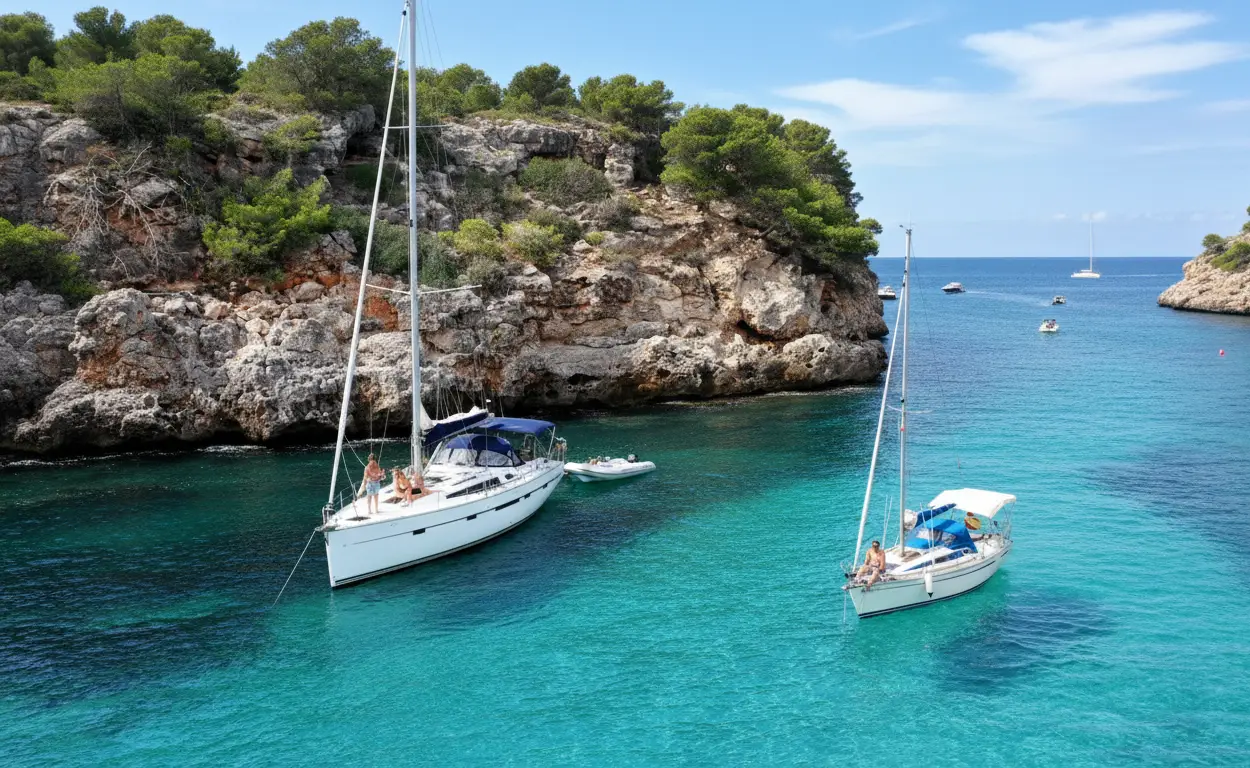
Moraira is considered one of the most convenient small ports on the northern Costa Blanca for boat trips due to its sheltered bay and calm sea conditions. From here, routes run along the coastline, allowing visitors to see cliffs, small beaches and hidden coves that are often inaccessible from land. These trips are especially popular in the warm season, when the sea remains calm and water clarity is high.
Boat rental: self-drive trips and skippered charters
Boat rental in Moraira includes a wide range of options, from small motorboats that can be operated without a licence to yachts with a professional skipper. Self-drive boats are suitable for short coastal trips, while skippered charters allow access to more remote coves such as Cala Llebeig or natural stretches between Moraira and Benissa.
Swimming, snorkelling and cove stops
Most boat trips include stops for swimming and snorkelling in clear and uncrowded areas. The coastline around Moraira is characterised by rocky formations and transparent water, making these stops particularly appealing. Travellers often choose routes that combine relaxing time on board with swimming in secluded coves away from urban beaches.
Restaurants and gastronomy in Moraira (seafood, paella)
Moraira’s gastronomy is based on Mediterranean cuisine with a strong emphasis on fresh seafood. In the harbour and along the promenade, restaurants serve fish, squid, prawns and traditional paella prepared according to local recipes.
A distinctive feature of the region is the use of the daily catch from local fishermen, delivered through the port fish market. This ensures high quality and seasonal freshness. In the evening, the promenade becomes the centre of gastronomic life, especially in high season when seaside tables are booked in advance.
Moraira’s culinary culture combines Valencian traditions with rich marine resources. Local restaurants offer dishes made from fresh catch such as sea bream, grouper, sea bass, prawns and the famous red langoustines. Fishermen return daily with their catch, and many restaurants operate on a “fish of the day” basis.
Signature dishes include caldero, a rich rice dish cooked in fish broth, traditional arroz a banda with rice prepared with octopus and seafood, and fideuà, a paella-style dish made with short noodles (fideus), usually served with aioli. These dishes reflect the historical roots of the cuisine and the strong connection to the sea.
Restaurants in Moraira for the perfect dining experience
- The Olive Tree Restaurant – a cosy family-run restaurant offering European-Mediterranean cuisine with a focus on steaks and fish – Camino El Paellero 4, Moraira – view on map
- Kosta Restaurant – a popular modern Mediterranean restaurant, ideal for dinner and a glass of wine – Moraira centre – view on map
- Carvón Wine & Fire – a stylish restaurant specialising in grilled meats, seafood and an excellent wine list – Moraira centre – view on map
- Tasca 42 – a tapas bar on the Moraira–Calpe road with a casual atmosphere, snacks and wine – Carretera Moraira–Calpe 128, Moraira – view on map
- Brasserie Vivaldi – a brasserie offering European and Mediterranean cuisine, ideal for relaxed lunches and dinners – Moraira centre – view on map
The vineyards around Moraira produce traditional sweet Moscatel wine, known for its aromatic notes and rich flavour. It is often served with desserts and is also a popular souvenir among visitors.
Where to stay in Moraira (hotels, villas and best areas 2026)
Moraira is a small but prestigious Costa Blanca resort where the main accommodation options are private villas, apartments and small boutique hotels. Unlike large tourist centres, there are no high-rise hotel complexes, and construction is strictly regulated to preserve a calm atmosphere and low housing density. In 2026, this remains one of the key characteristics of the resort.
Hotels by the sea
Small hotels in Moraira are usually located near the promenade, the harbour or within walking distance of Playa de l’Ampolla and El Portet. These are compact properties with a limited number of rooms, often focused on quiet stays and couples. Some are boutique hotels with pools, restaurants and sea views, but without mass-market infrastructure.
The main advantage of seaside accommodation is proximity to beaches, restaurants and evening life along the promenade. This option suits travellers who prefer minimal transport and want to stay in the heart of the resort atmosphere.
Hotels in Moraira on Google Maps
Villas and apartments
The dominant form of accommodation in Moraira is villas and apartments, which make up the majority of tourist housing in the area. In 2026, there is a wide selection available: from compact apartments in the centre to sea-view villas with private pools.
Villas are especially popular among families and groups due to their privacy, kitchen facilities and terraces. Many properties are located in residential urbanisations with sea views or in green hillside areas. These locations offer tranquillity and quick access to beaches and coves.
Apartments are more often chosen for short stays or couples, as they are closer to the centre and within walking distance of restaurants and the promenade.
Villas in Moraira on Google Maps
Best areas to stay in Moraira
Moraira can be broadly divided into several zones, each suitable for different types of holidays:
- Town centre and Playa de l’Ampolla – best for those who want to be close to infrastructure, restaurants and the main beach.
- El Portet – a quieter and more exclusive area with villas and one of the most beautiful coves on the Costa Blanca.
- Harbour area – convenient for walks, boat trips and evening life by the promenade.
- Hillside urbanisations – popular for panoramic views, privacy and private villas with pools.
In 2026, choosing an area in Moraira depends entirely on the type of holiday: the centre for activity and convenience, El Portet and the hills for peace and views, and the harbour for a mix of walks and gastronomy.
Moraira vs Calpe and Jávea: why expats choose Moraira
Moraira, Calpe and Jávea are three popular destinations on the northern Costa Blanca, but they differ significantly in atmosphere, density and lifestyle. Below is a comparison explaining why Moraira is often considered a more comfortable choice for expats seeking tranquillity and privacy.
| Criteria | Moraira | Calpe | Jávea |
|---|---|---|---|
| Atmosphere | Quiet resort with low-rise development and residential character | More touristy and lively town | Mix of tourist areas and residential zones |
| Tourist flow | Moderate, without mass tourism | High, especially in summer | Medium to high seasonally |
| Urban development | Low-rise, strict height restrictions | Densely built with high-rise buildings near the coast | Mixed development pattern |
| Beaches | Small coves with clear water and calm atmosphere | Wide beaches with more tourist infrastructure | Diverse beaches and coves |
| Lifestyle | Quiet, oriented towards long-term residents and expats | More dynamic and tourist-focused | Balanced between tourism and residents |
Why expats often choose Moraira: low construction density, absence of mass tourism, a slower pace of life and a preserved natural environment make the town attractive for long-term living. Unlike Calpe, there are fewer high-rise buildings and less tourist noise, and compared to Jávea, the atmosphere is more intimate and peaceful.
Practical information for visitors in Moraira (2026)
Moraira remains one of the most comfortable and well-organised resorts on the northern Costa Blanca. It is a quiet town with low-rise development, strong infrastructure and a high level of safety, where tourist flow is evenly distributed throughout the year. In 2026, prices, transport and general travel conditions remain stable compared to previous seasons, although Moraira continues to position itself as a premium destination with above-average pricing.
Prices for accommodation, food and car rental in Moraira (2026)
Moraira is considered a higher-end resort on the northern Costa Blanca, mainly due to limited construction, strong demand for seaside villas and its focus on a quieter, higher-quality holiday experience. Unlike mass tourism destinations, prices here show fewer seasonal fluctuations and remain relatively stable throughout the year.
Estimated 2026 costs:
- Accommodation: apartments range from approximately €90–€180 per night depending on season and location; villas and seaside houses start from €200+, with premium properties significantly higher.
- Dining: lunch in cafés around €15–€25 per person; dinner in waterfront restaurants from €25–€60 per person, with higher prices for sea-view and premium venues.
- Car rental: from €35–€60 per day for a standard car in low season; in peak summer (July–August), prices may rise to €70–€100 per day depending on vehicle class.
Despite higher prices, Moraira remains attractive due to its quality infrastructure, tranquillity and lack of mass tourism, which ensures stable demand without extreme price spikes seen in overcrowded Costa Blanca resorts.
Budget in Moraira 2026: free and paid activities
In 2026, Moraira offers a wide range of activities for different budgets, from completely free nature-based experiences to premium sea excursions. The Costa Blanca region is generally known for affordable marine activities, especially group tours and boat rentals.
Free activities in Moraira
- Coastal walks (El Portet, Cap d’Or)
- Relaxing on beaches and natural coves
- Viewpoints overlooking the sea and Peñón de Ifach
- Sunset watching along the rocky coastline
- Hiking along Moraira’s coastal trails
Paid activities in Moraira (prices 2026)
- Kayak or SUP rental – from ~15–25€ per hour
- Group boat trips – from ~25–60€ per person (depending on route and duration)
- Motorboat rental without license – from ~130–250€ for half a day for a small group
- Private yacht tours with captain – from ~180–400€ for 2–4 hours
- Yachting (private charters) – on average from ~150–650€ per day depending on vessel size and season in the Costa Blanca region
According to the Costa Blanca boat rental market data, the average cost of yacht trips in the region is around 300–600€ per day, while basic options start from approximately 150€ in the low season or in group formats.
Thus, Moraira remains a destination with a good balance: most natural activities are free, while marine entertainment is available across a wide price range – from budget to premium.
Parking and transport in Moraira
Moraira is compact, and most internal movement within the town is done on foot. However, a car is practically necessary to visit the coves and nearby areas.
In the town centre and near Playa de l’Ampolla and El Portet beaches, there are organised parking areas, but in the high season (July–August) they can fill up early in the morning. Therefore, parking zones on elevated areas are often used, followed by a walk down to the coast.
Public transport is limited: there is no direct train station in the town, the nearest is in Teulada, and bus routes connect Moraira with Alicante and Valencia. Therefore, car rental remains the main means of transport in the region.
Safety and beach behaviour rules
Moraira is considered one of the safest resorts on the Costa Blanca, with a low crime rate and a calm atmosphere even in the high season. The main rules are related not to safety but to ecology and spatial organisation.
Standard rules apply on beaches and in coves:
- it is forbidden to leave rubbish and personal items after visiting the beach;
- lifeguard services operate on main beaches during the season;
- in some coves (especially natural ones), there is no infrastructure, so it is important to bring water and sun protection in advance;
- in popular areas it is not recommended to occupy space “from early morning” without presence – this is regulated by local public beach rules in Spain.
In 2026, the municipality continues its policy of preserving the natural coastline and controlling beach pressure, especially in the El Portet area and natural coves.
Moraira and its surroundings are known for their scenic Costa Blanca coastline, where cliffs, coves and sea panoramas create ideal conditions for photography. In addition to popular beaches, there are less-known places especially valued for their privacy and sunset views.
One of the best directions for sunset photography are the rocky coastal sections between El Portet and the centre of Moraira. From here, panoramic views of the Mediterranean Sea open up, and on clear days the silhouette of Peñón de Ifach can be seen on the horizon.
Coastal trails running above the coves are also popular among photographers. From them, views open onto turquoise water, rock formations and small hidden beaches inaccessible from the main promenade.
Particular attention should be paid to viewpoints in the Cap d’Or area, where an old watchtower complex is located. From the height, there is a wide view over the Moraira coastline and neighbouring towns, especially impressive during the golden hour before sunset.
Less known “hidden viewpoints” can be found along the paths leading to Cala Llebeig and other secluded coves. These places are characterised by minimal tourist presence and a natural environment, making them ideal for atmospheric photography.
It is important to consider that access to some rocky areas requires caution due to uneven terrain, especially in the evening.
Preliminary event calendar in Moraira (May–October 2026)
In addition to natural attractions, cosy coves and historic sites, Moraira regularly hosts a variety of vibrant events that make the town especially lively throughout the year. Traditional festivals, gastronomic fairs, music concerts and maritime celebrations reflecting Costa Blanca culture can be experienced here. Below are some of the most notable events usually held in Moraira across different seasons.
- May 2026 – Vive Teulada-Moraira: gastronomic and craft festival near the castle, live music, market and local products
- May 2026 – regional sports events (including Teulada-Moraira triathlon and sailing activities)
- June 2026 – Fiesta Moros y Cristianos: historical parades, reenactments, concerts and fireworks
- June 2026 – San Juan: night bonfires, beach celebrations and traditional rituals
- July 2026 – Fiestas de la Virgen del Carmen: maritime processions, music and fireworks in the port
- July 2026 – summer concerts and street events near Moraira castle
- August 2026 – Medieval Market: medieval fair with crafts and street performances
- August 2026 – music festivals and summer concerts in the town centre
- September 2026 – local cultural celebrations and regional gastronomic events
- October 2026 – Gourmet Race: sailing regatta with gastronomic programme in the port
Up-to-date information can be found on the events calendar page and on official tourist resources of the Costa Blanca region.
FAQ about Moraira (Costa Blanca) – 10 questions not included in the main guide (2026)
Below are practical questions most frequently asked by travellers before visiting Moraira. These answers are based on current information about the resort and tourism practice in the Costa Blanca region in 2026.
1. Is Moraira suitable for a quiet holiday without tourist crowds?
Yes. Moraira is considered one of the calmest resorts on the northern Costa Blanca. There are no high-rise hotels or mass tourism, and construction is strictly controlled. The atmosphere is more like an upscale residential coastal town than a classic tourist centre.
2. Can you stay in Moraira without renting a car?
Partially yes, but with limitations. The centre, promenade and main beaches are walkable. However, a car significantly simplifies travel to coves, viewpoints and nearby towns (Calpe, Jávea, Benissa).
3. How clean is the sea in Moraira?
The water in Moraira is considered one of the cleanest on the Costa Blanca. Many beaches and coves have Blue Flag status, and thanks to the rocky seabed and lack of industry, the water remains clear most of the year.
4. Is there nightlife in Moraira?
Nightlife here is calm and focused on seaside restaurants and bars. There are almost no clubs or loud discos. Evening activity is mainly concentrated along the promenade and port area.
5. Can you swim in the sea all year round?
Formally yes, but the comfortable season lasts from May to October. In winter, water temperature drops to around 14–16°C, and swimming becomes mainly for experienced and hardened swimmers.
6. How expensive is Moraira compared to other resorts?
Moraira is one of the more expensive destinations on the Costa Blanca. This is due to limited construction, high demand for seaside villas and low tourist density. At the same time, service levels correspond to the premium segment.
7. Are there supermarkets and basic infrastructure in Moraira?
Yes, the town has supermarkets, pharmacies, medical centres and all essential infrastructure for comfortable living. Despite its compact size, Moraira is fully self-sufficient for long stays.
8. Is Moraira safe for tourists?
Moraira is considered a very safe resort. Crime levels are low, and the main focus is on peaceful family tourism. Standard precautions apply as in any tourist region.
9. When is the best time to book accommodation for 2026?
Ideally 3–6 months in advance, especially for seaside villas or accommodation in the El Portet area. The summer season (July–August) has high demand, and the best options are booked early.
10. How many days do you need in Moraira?
At least 4–5 days to see the main beaches and coves. Ideally 7–10 days if you plan trips to Calpe, Jávea and other towns in the region, as well as active leisure (routes, coves, boats).
Conclusion
Moraira is a true oasis of tranquillity and natural harmony. Here you can enjoy clear coves, well-kept beaches, pine trails and a gentle rhythm of life. Despite its intimate scale, the town offers a high level of service, excellent gastronomy and many places for walks.
It is a corner you want to return to – for clean sea, beautiful landscapes, silence and Mediterranean atmosphere.
Summary: is it worth visiting Moraira in 2026?
Moraira in 2026 remains one of the most balanced resorts on the Costa Blanca, combining a calm atmosphere, clean beaches and a high level of comfort. Unlike major tourist centres, it maintains low-rise development, avoids mass tourism and offers a more “intimate” holiday format focused on quality rather than quantity of entertainment.
This destination is especially valued by travellers seeking peace, a safe environment and beautiful Mediterranean nature. Beaches and coves remain well maintained, and infrastructure develops carefully without overloading the coastline. The town is suitable both for short holidays and long-term stays due to its mild climate and year-round activity.
At the same time, Moraira is not a place for active nightlife or mass entertainment – its value lies elsewhere: in privacy, coastal aesthetics and the feeling of “non-touristic Spain” even in high season. Many visitors note that here you can still feel a more authentic atmosphere of the Costa Blanca despite the region’s popularity.
In 2026, Moraira confidently remains a choice for those who prefer a calm premium seaside holiday, natural coves, walks and gastronomy instead of noisy resorts. If the goal of the trip is relaxation, sea and beautiful nature without crowds, this destination fully meets expectations.
