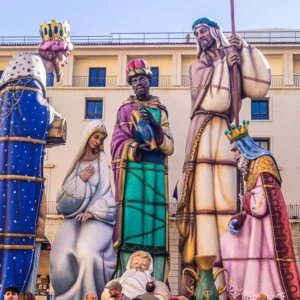

Fallas 2026 in Benidorm: Dates, Program, and How to Attend
Fallas 2026 in Benidorm is one of the most vibrant spring events on the Costa Blanca. This traditional Valencian festival of fire, art, and satire attracts thousands of visitors every year. In March, the city fills with music, the smell of gunpowder, parades in national costumes, and huge artistic figures that are ceremoniously burned at the finale.
The festival has deep historical roots and is officially recognized as an intangible cultural heritage by UNESCO (included in the list in 2016 as part of the Valencian Fallas tradition). Although the main center of celebrations is Valencia, Benidorm actively participates in this cultural tradition and organizes its own program of events.
What Fallas Is and How the Festival Takes Place in Benidorm
Fallas is a traditional festival of the Valencian autonomous community, held annually in March in honor of Saint Joseph (San José), the patron saint of carpenters. Historically, the festival originated as a craft tradition: carpenters used to burn wooden constructions that had been used during winter to light up workshops. Over time, satirical figures mocking public events and characters were added to these bonfires.
Origin of the Fallas Festival and Connection with San José
The Fallas festival traces its roots to the medieval craft traditions of the Valencian region. Its origin is linked to the professional activity of carpenters (carpinteros), who during the winter used special wooden constructions to hang oil lamps in their workshops. These supports were called “parots.”
With the arrival of spring, when daylight lengthened and additional lighting was no longer necessary, carpenters would bring the wooden structures outdoors and burn them. Gradually, old clothes, straw, and other materials were added to these structures, giving them the shape of human figures. This utilitarian practice evolved into a symbolic ritual for bidding farewell to winter.
Over time, the tradition developed further: simple figures turned into satirical compositions reflecting social events, political topics, and everyday scenes. These figures became known as “ninots,” and the monumental compositions themselves were called “fallas.”
Connection with San José (Saint Joseph)
The key date of the festival, March 19, is associated with Saint Joseph’s Day (San José). In the Catholic tradition, Saint Joseph is regarded as the patron of carpenters and artisans. Since carpenters laid the foundation of the tradition of burning wooden structures, the festival naturally became linked to their heavenly patron.
March 19 is officially celebrated as Saint Joseph’s Day in Spain. In the Valencian Community, this day became the culmination of Fallas. At night, La Cremà takes place—the ceremonial burning of all erected figures. This ritual symbolizes renewal, the end of a cycle, and the beginning of a new spring.
Thus, Fallas embodies several meanings simultaneously:
- The professional tradition of carpenters;
- Catholic veneration of Saint Joseph;
- A folk ritual of saying goodbye to winter;
- The contemporary artistic and satirical culture of the region.
Over time, the festival became a large-scale public event, but its historical connection to artisans and Saint Joseph’s Day remains a key part of Fallas identity. This is why the main events take place in mid-March, with the climax always on the night of March 19.
Today, Fallas includes:
- Monumental artistic compositions (ninots)
- Daytime pyrotechnic shows (mascletà)
- Floral offerings (Ofrenda)
- Parades and traditional costumes
- Nighttime fireworks
- Final burning of figures (La Cremà)
In Benidorm, the festival is organized through city commissions (falleros), each creating its own composition and arranging events in its district. The atmosphere here is more intimate than in the regional capital, allowing tourists to experience the tradition up close.
Fallas 2026 Dates in Benidorm
Traditionally, the main days of Fallas fall between March 15 and 19, with the climax being the night of March 19—La Cremà.
Expected key stages of Fallas 2026:
- March 15 – Plantà (installation of figures)
- March 16–18 – mascletà, concerts, parades
- March 17–18 – Ofrenda (floral offering)
- March 19 – La Cremà (burning of figures)
The exact program is confirmed by city authorities closer to the event date.
Program of Fallas 2026 Events
Parades and Street Processions
During Fallas, the streets of Benidorm are filled with participants in traditional Valencian costumes. Women’s silk dresses, decorated with embroidery, and elaborate hairstyles with traditional pins are an important part of the region’s cultural heritage.
Parades are accompanied by brass music, orchestras, and dance ensembles.
Floral Offerings (Ofrenda)
Ofrenda is one of the most emotional events. Participants carry flowers to the image of the Virgin Mary. Thousands of bouquets combine to form a massive floral composition.
Mascletà
Mascletà is a daytime pyrotechnic show focusing not on visual effects, but on rhythm and sound power. Spectators gather in central squares to feel the vibration of the explosions.
Nighttime Fireworks
In the evening, the sky over Benidorm lights up with fireworks. Unlike mascletà, night shows are oriented toward visual spectacle.
Children’s Activities
The program traditionally includes children’s parades, costume contests, and special mini-figures (Fallas infantiles), which are also burned at a separate time.
Main Event Locations in Benidorm
The main festive zones are concentrated:
- In the city center
- In traditional districts where fallas commissions operate
- On central squares
Fallas Commissions and Benidorm Districts
In Benidorm, the Fallas festival is organized by city commissions (comisiones falleras), each responsible for creating its own artistic composition (falla), decorating the district, and running the event program. Major events take place across several parts of the city, creating a festive atmosphere “throughout Benidorm”—from the historic center to residential and tourist neighborhoods.
During the festival days, street processions, musical parades, mascletà, concerts, children’s activities, and evening fireworks occur throughout the city. Commissions coordinate with each other, and residents actively participate in the processions, wearing traditional Valencian costumes.
Falla Benidorm Centro
The Falla Benidorm Centro commission operates in the central part of the city—the historic and administrative district. Some of the most prominent and visited figures are often installed here. The central falla traditionally attracts many spectators due to its convenient location and high foot traffic.
Official ceremonies, part of the musical performances, and festive processions take place in this district. The city center becomes a key spot during the Ofrenda (floral offering) and also hosts daytime pyrotechnic shows. The compact streets create a particularly intense festive atmosphere.
Falla Els Tolls
Falla Els Tolls represents one of Benidorm’s residential districts. The commission actively participates in the city’s cultural life and annually prepares its own artistic composition as well as a children’s falla infantil.
In the Els Tolls district, local parades, musical performances, family activities, and gastronomic gatherings are held for residents and visitors. The atmosphere here is more intimate and traditional, allowing a closer look at the local falleros community and an “inside view” of the festival.
Falla Rincón de Loix
The Falla Rincón de Loix commission operates in one of Benidorm’s most famous districts—Rincón de Loix, which is considered a tourist hub. Traditional Valencian elements of the festival blend here with an international audience of visitors.
Large-scale compositions, evening events, concerts, and festive parades are installed in this district. Due to the high concentration of hotels and apartments, many tourists can watch the events literally within walking distance of their accommodation.
Thus, Fallas 2026 in Benidorm covers the entire city: processions pass through different neighborhoods, mascletà is audible in multiple districts, and evening events are distributed among the commissions. This creates a dynamic festival format where each district contributes to the overall atmosphere of fire, music, and Valencian traditions.
Geography of Fallas 2026: Where to Go and Where to Watch by the Hour
During Fallas in Benidorm, festival activity is spread across several zones, streets, and squares. To avoid getting lost in the program, below are guidelines by district, streets, and sequence for visiting main events, as well as suggested routes for an evening or family day.
Where to Find Fallas by District
These landmarks can be used for planning your visit, using the street signs and directions as reference:
- Falla Benidorm Centro:
- Main street: Calle Santo Domingo – this is where the central Centro falla is located.
- Plaza Triangular – festive parades pass by here.
- Casal Centro – usually at the corner of Calle Santo Domingo and Calle San Vicente.
- Falla Els Tolls:
- Calle Pilar – central fallera point.
- Alleys Calle Botella and Calle Campoamor – impressive mini-ninots.
- Casal Els Tolls at the intersection of Calle Pilar and Calle Botella.
- Falla Rincón de Loix:
- Avenida Rincón de Loix – the extended main zone.
- Section from Calle Gérmenes to Calle Alhelí – large figures and evening activities.
- Casal Rincón is usually between Calle Gérmenes and Calle Alhelí.
Main parade routes
The falleros’ processions (parades with music and costumes) follow pre-established routes. They usually proceed sequentially through major streets, starting in one neighborhood and moving to another:
- Parade in Centro:
- Gathering at Calle Santo Domingo toward Plaza Triangular
- Movement along Calle San Vicente
- Finish at Casal Centro
- Parade in Els Tolls:
- Start at Calle Pilar
- Movement along Calle Botella
- Finish at Casal Els Tolls
- Evening march in Rincón de Loix:
- Gather at Avenida Rincón de Loix
- Parade along the avenue
- Stop at the evening stage between Calle Gérmenes and Calle Alhelí
It is recommended to take positions along these streets at least 30–45 minutes before the parade starts, especially if you want to photograph or see the procession up close.
“1 evening – 3 locations” route
Here is a ready evening walking plan for Fallas, including three key points:
- 19:00 – Centro Start at Calle Santo Domingo, walk past the central fallas and Casal Centro. Evening performances of brass bands and local contests often take place here.
- 20:00 – Els Tolls Walk along Calle Pilar and observe local mini-parades. Els Tolls usually has a calmer but very atmospheric setting with music and family events.
- 21:30 – Rincón de Loix End the evening along Avenida Rincón de Loix. Here the largest evening parades and fireworks shows occur.
This route is ideal for those who want to experience different aspects of the festival – from the classic city center to local neighborhoods and the evening visual program.
Family day route
If you come with children and want a relaxed tour of the main zones, this plan helps pace your visit comfortably:
- 16:00 – Centro Start with a walk along Calle Santo Domingo; the cute ninots and daytime music performances are particularly enjoyable for children.
- 17:00 – Els Tolls Visit Calle Pilar – competitive contests for children, mini-parades, and treats are often held here.
- 18:30 – Central park or playground Take a break before the evening mascletà.
- 19:30 – Mascletà Enjoy the daytime pyrotechnic display at one of the central squares (usually near Centro).
- 20:00 – Light dinner Enjoy a Valencian paella at one of the cafés near Plaza Triangular.
This schedule suits families who want to combine the festival with comfort.
Orientation tips
- If you see casales with signs and flags – it is a landmark: a falla is always nearby.
- Processions usually start on main streets and move toward central squares.
- Arriving early (30–45 minutes before start) helps secure a good viewing spot.
This verbal “map” and ready-made routes help not only to locate events but also to plan your walks by time and mood – from a quiet family stroll to a full evening procession.
What to see for tourists during Fallas
Most impressive figures
Each falla is a satirical composition reflecting social, political, or cultural themes of the year. Figure heights can reach several meters.
Evening event atmosphere
Music, street parties, and food stalls create a feeling of continuous celebration.
Photo zones
Particularly impressive shots can be taken:
- During the installation of the figures
- At the moment of La Cremà
- During the floral processions
Practical timing for day and evening: how to plan Fallas without rushing
The official Fallas program usually only indicates the start times for mascletà, parades, and cremà. In practice, this is not enough: streets are closed, crowd density varies by neighborhood, and the best viewing spots are taken in advance. Below is a detailed breakdown of when to arrive, how much time to allocate for transfers, and how to combine events efficiently over 1, 2, or 3 days.
When to realistically arrive for key events
Mascletà (daytime pyrotechnic display)
- Official time: usually 14:00.
- When to arrive: at least 45–60 minutes in central areas; 30 minutes in neighborhood zones.
- Why so early: streets around the square are closed 60–90 minutes before the start, and crowd density increases quickly.
- Where to stand: best to choose side areas of the square or wide intersections – easier to leave after the show.
Parade (Ofrenda, falleros’ processions)
- Official time: usually 18:30–19:00.
- When to arrive: 30–45 minutes for a good view; 60 minutes if you want to take photos or be in the front row.
- Best spots: route turns and street narrowings – the procession slows down, allowing closer inspection of costumes.
Cremà (burning of figures)
- Official time: children’s fallas around 22:00; main fallas 23:30–00:00.
- When to arrive: at least 45 minutes; for large fallas – 60–75 minutes.
- Important: the safety zone around the monument expands before ignition, so arriving late means you will be much further away than planned.
Time allocation for transfers
During Fallas, movement through the center and adjacent neighborhoods is limited. Even if distances seem short, consider crowd density and closures.
- Centro → Els Tolls: allocate 20–25 minutes on foot normally, up to 35 minutes in the evening.
- Centro → Rincón de Loix: 30–40 minutes during the day, up to 50 minutes in the evening.
- Within one neighborhood: 10–15 minutes between locations.
If you plan to attend two events consecutively in different neighborhoods, allow at least 30–40 minutes extra on top of standard walking time.
How to combine events in different neighborhoods
The best way to avoid rush is to plan the day so that you move “from center to outskirts” in the evening, not the other way around. The center is usually the most crowded.
- During the day – choose Centro for mascletà.
- In the evening – move to Els Tolls for a more intimate atmosphere.
- Late evening – finish in Rincón de Loix, where the larger evening events take place.
Ideal plan for 1 day
Morning
- 10:00–12:00 – relaxed walk through Centro, viewing ninots and photographing without crowds.
- 12:00–13:00 – light lunch in advance to avoid searching for a restaurant at peak time.
Day
- 13:00 – secure a spot for mascletà.
- 14:00 – mascletà.
- 14:20–16:30 – rest or walk along less crowded streets.
Evening
- 18:00 – take position for the parade.
- 19:00 – procession.
- 20:30 – dinner.
- 22:30 – secure a spot for the main falla cremà.
Ideal plan for 2 days
Day 1 – Classic program
Centro + mascletà + evening parade + cremà of a small falla.
Day 2 – Neighborhood atmosphere
- Morning – Els Tolls, family events.
- Day – free time or beach.
- Evening – Rincón de Loix, evening concerts and large cremà.
This format allows you to see different scales of the festival without overloading a single day.
Ideal plan for 3 days
Day 1 – Introduction
Explore all main fallas without tying to specific events, familiarize with the neighborhoods.
Day 2 – Parade and mascletà
Dedicate the day to the official program with exact timing.
Day 3 – Finale and cremà
Focus on evening events, arrive early, and choose a large falla for the final burning.
General recommendations
- Always arrive at least 30–60 minutes before a key event.
- Do not plan more than two “must-see” points in one evening.
- Allow an additional 20–30 minutes for street closures.
- If traveling with children – take breaks between daytime and evening programs.
This practical timing helps avoid chaotic movements and allows you to experience Fallas systematically – comfortably and without rushing.
Transport, parking, and street closure map during Fallas
On Fallas days, traffic in Benidorm is heavily restricted: main streets are closed, intersections become pedestrian zones, and vehicle flow is diverted. Planning transport and parking in advance is key to a comfortable festival visit.
Street closure map
Major closures occur in the following areas:
- Centro: Calle Santo Domingo, Calle San Vicente, Plaza Triangular – pedestrian zones from 13:30 until the end of mascletà and parades.
- Els Tolls: Calle Pilar, Calle Botella – closures from 17:30 until the end of evening processions.
- Rincón de Loix: Avenida Rincón de Loix – closure from 19:00 until the end of the evening program and cremà.
Important: after 16:00 it is not advisable to enter the center by car – movement is almost impossible, and leaving after the event is also difficult.
Parking: safe and convenient locations
It is recommended to use parking lots outside high-traffic zones:
- Shopping centers: the Centro Comercial La Marina and La Cala parking lots are conveniently located and allow walking to Centro in 10–15 minutes.
- Neighborhoods outside the commissions: parking near Levante Beach (along Avenida Mediterráneo) and Playa Poniente – 15–20 minutes walk to Els Tolls or Centro.
- Rincón de Loix parking: near large hotels and supermarkets; booking in advance for the evening is recommended.
For those wishing to avoid city traffic, it is more convenient to leave the car on the outskirts and move on foot or by public transport.
Public transport
During Fallas, bus routes and taxis adjust their schedules:
- Buses: lines L1, L3, and L5 are considered the most reliable as they run along main avenues and bypass major pedestrian zones. Plan the trip with an extra 15–20 minutes for stops.
- Taxis: better to order via apps in advance; free cars are hard to find in the center from 18:00 to 00:30.
- Walking routes: usually it is easier to walk from the parking lot near a shopping center or beach to key squares.
Travel tips
- Do not try to drive into the center after 16:00 – closures and dense crowds make it almost impossible.
- Allow extra time for transfers between zones – at least 20–30 minutes, especially in the evening.
- If planning to see multiple neighborhoods in one evening, parking on the outskirts with a walking approach saves time and nerves.
- Follow announcements from the commissions and city administration – sometimes additional temporary parking areas open and traffic is regulated.
Proper transport planning, parking selection, and understanding closures allow you to enjoy Fallas with minimal difficulty and avoid chaos during the mass parades and cremà.
Safety and comfort during Fallas: noise, children, and the elderly
Fallas is a festival of fire, music, and pyrotechnics, so it is important to plan safety and comfort in advance for all participants, especially children, the elderly, and those sensitive to noise or large crowds.
Noise and pyrotechnics
Mascletà and evening cremà are accompanied by strong sound effects and loud pyrotechnic blasts. Noise levels can reach 100–120 dB near the center and main squares.
- Areas with moderate noise: side streets and secondary alleys, such as Calle San Vicente (secondary points in Centro) or Calle Botella in Els Tolls. Here you can hear the atmosphere, but the roar is less intense.
- Hearing protection for children: use noise-canceling earbuds or soft protective headphones for small children. For teenagers, sports headphones with volume limitation are suitable.
Children and Family Groups
Visiting Fallas with children requires planning in terms of routes and locations:
- Choose central squares with barriers and a safe distance from fireworks.
- Children’s fallas (falla infantil) are usually located in calmer areas – a great opportunity to show children the tradition without risk and excessive noise.
- For stroller walks – avoid narrow alleys during peak hours (17:00–21:00). Prefer central squares with wide sidewalks or parks near the Centro area.
Elderly and Less Mobile Visitors
- It is recommended to plan visits in the morning or early in the day when the crowd is less dense.
- Use tactile landmarks and pre-determine rest spots along the route.
- Squares with wide access (Plaza Triangular, Avenida Mediterráneo) allow comfortable observation of processions and mascletà without the need to stand in a dense crowd.
People with Anxiety and Sensory Sensitivity
- Avoid the most intense areas immediately before cremà and mascletà.
- Choose side streets and viewing points at a distance of 30–50 meters from fireworks.
- Use noise-canceling headphones or earplugs to minimize stress.
- Plan a route with the possibility of quickly moving to quieter zones if necessary.
Fallas with Children, Elderly, and Noise-Sensitive Visitors
Recommended visiting format:
- Morning / Day: view ninots, walk in parks, visit falla infantil.
- Late Morning / Early Day: light snack and rest in a cafe near a square with a wide view.
- Day / Evening: choose side streets for observing parades and mascletà, use hearing protection for children and sensitive visitors.
- Night Finale: observe the cremà from a safe distance, follow safety zones, and have the option to move to quieter viewing points.
Following these recommendations makes visiting Fallas safe, comfortable, and enjoyable for all participants, regardless of age or sensitivity to noise.
Practical Budget for Fallas in Benidorm: How Much Money to Take
Visiting Fallas in Benidorm can be budget-friendly or quite expensive, depending on the format: self-guided or guided tour/excursion. Below are approximate prices and spending recommendations for 1 day or 1 evening.
Budget for 1 Day / 1 Evening
- Food:
- Breakfast in a cafe: 5–10 € per person
- Lunch / Meal: paella or daily menu in a restaurant – 12–20 € per person
- Dinner: light dinner or tapas – 10–18 € per person
- Drinks:
- Coffee or juice – 2–3 €
- Non-alcoholic drinks – 2–4 €
- Beer / wine – 3–5 € per glass
- Parking:
- Shopping center or beach parking – 3–6 € per hour
- Day rate for public parking – 10–15 €
- Souvenirs:
- Small magnets, postcards, keychains – 2–5 €
- Ninot figurines – 10–25 €
- Public Transport / Taxi:
- Bus: 1.50–2 € per ride
- Taxi: 5–10 € within the city
Total approximately: 40–60 € per person per day excluding tours and accommodation.
Tours and Excursions
A guided tour/excursion includes transport, accompaniment, and sometimes meals:
- Half-day tour: 30–50 € per person
- Evening tour with mascletà and cremà: 40–70 € per person
- Full day with guides and transport between areas: 60–100 €
Comparison:
- Self-guided visits are cheaper – 40–60 € per person per day, but require planning routes, parking, and timing.
- Tours or excursions are more expensive, but provide comfort, transport between areas, and detailed explanations of the festival.
Practical Tips on Clothing and Weather During Fallas
March in Benidorm combines warm daytime sun and cool evenings. Fallas festivities involve walking around the city, parades, mascletà, and cremà, so it is important to be prepared for changing weather and festival conditions.
Layered Clothing
- Daytime: light T-shirt or shirt, light pants/jeans.
- Evening: always have a light jacket or sweater – temperatures can drop to 12–14°C.
- A windbreaker / windproof jacket will be useful when it is windy on the promenade.
Footwear
- Comfortable walking shoes – sneakers or light boots, as there is a lot of walking on cobblestones.
- Avoid high heels or slippery soles – streets can be crowded and covered with ash.
Protection from Ash and Smoke
- During cremà, it is recommended to keep a distance of at least 10–15 meters from large fallas.
- A light mask or scarf will protect the respiratory system from smoke and sparks.
- Sunglasses will help protect the eyes from flying small particles.
Mini Checklist: What to Bring
- Cash – for small purchases, souvenirs, street food.
- Powerbank – for long walks and using your phone for photos/routes.
- Water – especially for children and elderly visitors.
- Jacket or sweater – for the evening.
- Small backpack or shoulder bag – convenient for keeping all items close at hand.
- Protective mask or scarf – during cremà.
Following these recommendations will allow you to fully enjoy the Fallas atmosphere while staying comfortable and protected from weather conditions and fireworks.
Gastronomy in Benidorm During Fallas 2026
Fallas is not only fireworks and parades, but also a true gastronomic feast. During these days, the streets of Benidorm turn into a large market with stalls, pop-up cafes, and family casales, where local dishes and traditional sweets can be tasted.
Fallas Casales and Streets with the Best Food
- Falla Benidorm Centro: Calle Santo Domingo and Plaza Triangular are famous for stalls with hot snacks, paella, and meat dishes. In the evening, pop-up bars with sangría and cerveza open.
- Falla Els Tolls: Calle Botella and Calle Pilar – a place for tapas and local snacks, including patatas bravas, tortilla, and chorizo a la sidra. Early evening is best for photos and buying buñuelos without queues.
- Falla Rincón de Loix: Avenida Rincón de Loix offers street points with seafood, fideuà, and traditional sweets such as fartons and turrón. Popular in the evening after parades.
Traditional Drinks
- Sangría: a fruit alcoholic cocktail – available at almost every pop-up point.
- Cerveza: local Spanish beers served in cold glasses.
- Horchata: a non-alcoholic tiger nut drink – especially popular among children and families.
- Vino tinto / blanco: light red and white wines from local winemakers.
Temporary Pop-Up Points and Visiting Hours
During Fallas, pop-up stalls open from 11:00 and operate until late evening:
- 11:00–14:00 – least crowded, convenient for breakfast and light snacks.
- 14:00–16:00 – lunch hour peak, expect queues for paella.
- 16:00–18:00 – family time and walks; some casales begin preparing buñuelos.
- 18:00–21:00 – popular time for tapas and local street wine after parades.
- After 21:00 – main crowd moves to cremà; queues for sweets such as buñuelos and fartons decrease.
Where and What to Eat During Fallas 2026 in Benidorm
- Calle Santo Domingo / Plaza Triangular: paella, fideuà, sangría, and cerveza.
- Calle Botella / Calle Pilar: tapas, tortilla española, patatas bravas, chorizo a la sidra.
- Avenida Rincón de Loix: grilled seafood, traditional sweets: buñuelos, fartons, turrón.
- Pop-up Dessert Points: turrón, buñuelos con chocolate, churros – recommended early morning or late evening to avoid queues.
- Cafes and Casales: family Falla casales often offer special tapas + drinks sets; local wines and non-alcoholic horchata can be tasted.
By following the timing recommendations and choosing local points, you can experience the full gastronomic palette of Fallas without wasting time in queues while enjoying the festival atmosphere.
Language and Cultural Context for Non-Spanish Speakers at Fallas
For tourists and visitors who do not speak Spanish, visiting Fallas can be slightly challenging without understanding terms and behavioral rules. Below are key concepts and tips on how to navigate the festival with respect for local traditions.
Mini Dictionary of Fallas for Beginners
- Plantà: the moment when all fallas (figures) are set up in the squares. Usually takes place at night before the main festival.
- Mascletà: daytime pyrotechnic “noise” spectacle with bursts of firecrackers and fireworks, creating a loud rhythm. It is recommended to listen from a safe distance.
- Ninot: a small figurine, part of a large falla. Some places hold voting for the “saved ninot” (ninot indultat).
- Casal: club or house of a Fallas commission where local residents gather, prepare food, hold events, and display their figures.
- Cremà: the final burning of the fallas figures – the culmination of the festival.
Behavior and Etiquette Rules
- Applaud at the beginning of the parade, during mascletà, and while viewing figures – this encourages falleros and creates a festive atmosphere.
- Approach figures only in specially fenced areas: casales usually have barriers for safety.
- Photograph falleros and figures respectfully: avoid flash in the dark, do not touch exhibits.
- Follow the instructions of volunteers and security personnel, especially during cremà and mascletà.
- Do not block streets and walkways – remember, this is a mass event for residents and visitors of the city.
Tips for Understanding Materials in Spanish and English
- Many programs and schedules are published in Spanish; English versions are not always available. It is useful to learn key words in advance: “plantà”, “cremà”, “mascletà”, “ninot”.
- Use maps and route diagrams with visual markers to avoid relying on text information.
- For communication with locals, basic phrases are sufficient: “Hola”, “Gracias”, “¿Puedo hacer una foto?” – they will appreciate respectful behavior.
Following these tips, non-Spanish-speaking visitors can comfortably and safely enjoy Fallas, understand the culture of the festival, and demonstrate respect for local traditions.
Practical Information
How to Get There
The nearest international airport is Alicante–Elche. From Alicante to Benidorm, you can travel by bus or car.
Where to Stay
During Fallas, it is recommended to book accommodation in advance. Popular options include:
- Hotels in the city center
- Apartments
- Resort complexes
Top 10 FAQs about Fallas 2026 in Benidorm
- When exactly do Fallas 2026 take place in Benidorm?
The main days are from March 15 to March 19, 2026, with plantà (installation of figures) on March 15 and the climax in cremà (burning) on the night of March 19 for Saint Joseph’s Day (Father’s Day in Spain). The program starts with despertà (morning firecrackers) and includes daily mascletà (fireworks) from March 17, parades, ofrenda floral (flower offering), and Nit del Foc (longest fireworks) on March 18. It is a national holiday (red day), many shops and offices will be closed on March 19, so plan transport in advance – buses and taxis will be crowded. - Where exactly are the main fallas and events?
Three commissions: Falla Benidorm Centro (Plaza Doctor Fleming, near Bristol Hotel), Falla Rincón de Loix (Av. Ametlla de Mar, opposite Burger King), and Falla Els Tolls (Calle Tomás Ortuño). Plantà and mascletà occur in these areas, parade carrozas goes along Av. Juan Fuster Zaragoza, Ametlla del Mar, and Mediterráneo to Esperanto; ofrenda – Plaza Castelar; cremà – at each falla location on the evening of March 19. Streets such as Av. Mediterráneo and Otoño are closed from early morning (5–6:00 to 15:00+), park in advance in zones outside the center, for example near shopping centers or beaches. - Is it noisy at Fallas, and how to manage with children or elderly?
Very noisy: despertà with firecrackers from 8:00, mascletà at 14:00 (loud like explosions), night verbena and fireworks until morning – this is the traditional feature of the festival since pagan times. For children/elderly, choose Els Tolls (quieter, family area) or watch from the beach/distance; take earplugs/hearing protection, avoid mascletà closer than 100 m. Family route: morning plantà without fireworks, day at the beach, evening ofrenda. If sensory sensitivity is an issue, skip Nit del Foc and cremà. - How to get there, where to park, and what about street closures?
Public transport: ALSA buses from Alicante / Costa Blanca (lines 006, 010), taxis / Uber will be full – book a day in advance. Parking: avoid the center, use parking lots at Levante (near the beach), El Cruce, or outside Els Tolls; free zones – outskirts of Rincón de Loix. Closures: Av. Mediterráneo (Europa–Plaza Hispanidad) from 18:00 March 18, Tomás Ortuño from 5:00 March 19 – 15–20 min walk from parking. From Valencia (larger Fallas) – day tour 50–80 € per person. - How much does it cost to visit Fallas in Benidorm (budget per day)?
Entry is free everywhere (streets, casales), but the budget per day: 20–30 € food/drinks (paella, buñuelos, churros 2–5 €), 10–15 € parking / transport, 5–10 € souvenirs (ninot figurines). Full day with dinner – 50–70 €/person, family – 150–200 €. Tours from Costa Blanca ~60 €, accommodation will increase by 50–100% (book 2–3 months in advance). Cheaper at falleros casales (commission tents) – paella and beer 10–15 € per serving. - What to wear and bring to Fallas?
March: daytime +18–22°C, night +12–15°C – layer clothing: shorts / light pants + sweater / windbreaker, comfortable shoes (lots of walking on cobblestones, ash from cremà). Bring: cash (few card terminals on streets), powerbank, water, sunscreen, earplugs, raincoat (rain possible), camera. Falleros wear traditional costumes (fallera – large dresses), tourists casual – main thing is comfort. - Fallas in Benidorm or Valencia – which to choose?
Benidorm – compact (3 fallas, smaller crowds, beach vibe, ideal for 1–2 days), for families / beginners; Valencia – epic (hundreds of figures, millions of people, daily mascletà from March 1, but chaos and prices double). From Benidorm to Valencia: 1.5–2 h by bus (ALSA ~20 €), travel agencies offer day trips March 15–19 for 70 €. Combo: March 16–17 in Benidorm, March 18–19 in Valencia. Benidorm cheaper / quieter. - Where to eat during Fallas: top spots and traditions?
Traditions: buñuelos (chocolate balls), fartons, paella in casales. Top: commission casales (Centro – best arroz, Rincón – churros), street kiosks on Av. Mediterráneo (paella 12 €), Mercado Central until 14:00. Evening verbenas with orchestras – food + music. Avoid beach bars (expensive), go to falleros tents by 13:00 – shorter queues. Vegan / gluten-free: ask for arroz a banda or salad in casales. - Can I participate without a fallero costume, and how to integrate?
Yes, 90% are spectators in casual attire; falleros (participants) in traje (dresses / jumpsuits) are commission members. Integrate: visit casales (free, treats), join pasacalles (just walk in the crowd), buy a Fallas flag / scarf. Respect: do not touch ninots, applaud after mascletà / cremà, do not litter. For full immersion – sign up for ofrenda as a volunteer through the commissions’ website.
Why Visit Fallas 2026 in Benidorm
Fallas is not just a festival. It is a combination of art, fire, traditions, and modern urban rhythm. Benidorm offers a more accessible and less crowded format compared to larger cities.
For tourists, it is an opportunity to:
- See authentic Valencian tradition
- Take unique photographs
- Feel the spring Mediterranean atmosphere
- Combine cultural rest with beach tourism
Fallas 2026 in Benidorm will be a bright spring event on the Costa Blanca, bringing together local residents and visitors in an atmosphere of creativity, music, and fire.
Tags: fallas 2026 benidorm, fallas benidorm 2026, fallas schedule benidorm, fallas map benidorm, fallas plantà benidorm, fallas cremà benidorm, mascletà benidorm 2026, ofrenda floral benidorm, nit del foc benidorm, falla centro benidorm, falla els tolls, falla rincón de loix, fallas routes benidorm, how to get to fallas benidorm, fallas parking benidorm, where to eat fallas benidorm, fallas budget benidorm, fallas prices benidorm, family route fallas, fallas with children benidorm, fallas safety benidorm, fallas clothing benidorm, fallas tips benidorm, pop-up food fallas, buñuelos benidorm, tapas fallas benidorm, paella fallas, churros fallas benidorm, what to see fallas benidorm, saint jose festival benidorm, fallas traditions benidorm, festival benidorm, fallas night fireworks, nit del foc route, falleros, ninot indultat, casal benidorm, fallas stops benidorm, fallas 2026 events, how to behave at fallas, tips for tourists fallas, fallas budget per day, parking tips fallas, fallas excursions benidorm, fallas tours benidorm, day trip valencia fallas, where to stay fallas benidorm, what to bring fallas, minimal fallas dictionary
Share this article
*This article is an informational overview. Official schedule, tickets, and updates are published on the organizers’ websites.
*If you notice any inaccuracies or errors in this article, please let us know by email: mist@costa-blanca.space.
-

Costa Blanca Wine Bars: Where to Taste Local Wines
-

Denia: Where to Enjoy the Best Seafood and Fish Dishes
-

The Palm Grove of Elche: UNESCO World Heritage, History and Top Things to See in 2026
-

Elche: Exploring the Historic Palm Groves and Cultural Routes
-

Spain Digital Nomad Visa 2026: Requirements, Costs & Application Guide
-

Saint Anthony’s Day on the Costa Blanca 2026 – Animal Blessings & Traditions